 SolarPowerNerd


Understanding the benefits of solar panels does not take a textbook. These 10 points cover the advantages that matter most, along with the drawbacks you should know about before going solar.
Solar power converts sunlight into electricity using photovoltaic cells or concentrated solar systems. For a detailed breakdown of the conversion process, see our guide on how solar energy works step by step.
Grid-connected solar installations have grown into the millions worldwide, and the cost continues to fall. Here are the benefits that matter most for homeowners considering solar panels.
What Are The Advantages of Solar Energy?
Solar Power Is Renewable
Solar energy is clean energy, a renewable energy source available anywhere in the world.
This means that we cannot run out of solar energy, as opposed to non-renewable energy sources (e.g. Fossil fuels, coal and nuclear).
We will have access to solar energy for as long as the sun is alive, another 6.5 billion years according to NASA.
We have worse things to worry about.
In fact, scientists have estimated that the Sun itself will swallow Earth 5 billion years from now.
Solar Power Is Abundant
The potential of solar energy and solar systems we use is beyond imagination.
The surface of the earth receives 120,000 terawatts of solar radiation (sunlight). That is 20,000 times more power than what is needed to supply the entire world.
So, with greenhouse gas emissions and the definite depletion of fossil fuels, we will have to rely on solar power systems.
Solar Power Is Sustainable
An abundant and renewable energy source is also sustainable, so our future lies in solar energy systems.
Sustainable energy sources meet the needs of the present without compromising the ability of future generations to meet their needs.
In other words, solar energy is sustainable because there is no way we can ever overconsume it and stay without it.
Solar Energy Systems Reduce Carbon Emissions
Solar power is a clean, renewable source of energy that can reduce carbon dioxide emissions and lower our impact on the natural environment.
Unlike traditional fossil fuels such as coal and oil, solar energy does not create pollutants (such as carbon dioxide) or release them into the atmosphere and water supply.
Even compared to nuclear energy, a solar panel system is a more environmentally friendly solution.
Perhaps the most admirable advantage of solar power is the fact that it benefits our environment while simultaneously helping our country to make the necessary transition from fossil fuels.
In pursuing energy solutions to help the US reduce overall emissions, our nation is also establishing independence from fossil fuels producers abroad.
As the world searches for the most cost-effective ways to reduce carbon dioxide output and air pollution, solar energy has become a leading resource for a good reason.
Solar power systems provide some of the best renewable energy we can tap into to generate electricity, cut energy bills, preserve the environment, and move away from fossil fuels.
Solar Systems Are Available Everywhere
Among solar energy pros are its availability all over the world. It significantly contributes to energy production and can fulfill the energy needs of every country.
Not only the countries that are closest to the Equator can put the sun’s energy to use.
Solar panel installation in Germany, for example, shows that every country in the world has a high capacity to harness solar power.
Solar Energy Reduces Electricity Costs
With the introduction of net metering and feed-in tariff (FIT) schemes, homeowners can now “sell” excess electricity, or receive bill credits, during times when they produce more electricity than what they consume.
This means that homeowners can reduce their overall electricity expenses by going solar.
Data from One Block Off the Grid reveals that adding solar panels to your home can bring in monthly savings of well above $100 in many states.
In Hawaii, residents save on average $64,000 in 20 years!
Nowadays, most homeowners choose leasing or power purchase agreements to finance their solar panels.
This drastically reduces, or in some cases completely eliminates, the upfront costs of a solar panel system, and allows homeowners to start saving money from the first day.
If you want to learn more about the advantages specifically related to residential solar photovoltaic panels (generating electricity with solar energy at home), then check out Benefits of Solar Panels.
Solar Energy Has Many Applications
Solar energy can be used for many different purposes.
It can be used to generate electricity in places that lack a grid connection, for distilling water in Africa, or even to power satellites in space.
Solar power is also known as “The People’s Power,” which refers to how easily deployable solar panels are at the consumer level (both photovoltaic and solar thermal).
With the introduction of flexible thin-film solar cells, solar power can even be seemingly integrated into the material of buildings (building integrated photovoltaics). Sharp, a solar panel manufacturer with headquarters in Japan, recently introduced transparent solar power windows.
Even small-scale products like solar garden lights show how versatile this technology has become.
Shared Solar
Because of shading, insufficient space and ownership issues, 1/5 American homes are simply unfit for solar panels.
With the introduction of shared solar, homeowners can subscribe to “community solar gardens,” and generate solar electricity without actually having solar panels on their own rooftops.
Solar Energy is Silent
There are no moving parts involved in most applications of solar power.
Unlike wind turbines, solar panels and whole solar systems do not produce any noise.
Financial Support
Government and state rebates have become available both on utility-scale and for the majority of homeowners.
This means that the effective costs of solar panels are much less than what they used to be.
In some cases, the price of a residential photovoltaic system can be cut more than 50%.
As of 12/31/2008, the U.S. Government offers a 30% tax credit with no upper limit.
Chances are your home is also eligible for other grants and rebates.
Solar Systems Are Low Maintenance
The majority of today’s solar power systems do not require a lot of maintenance.
Residential solar panels usually only require cleaning a couple of times a year.
Serious solar manufacturers ship 20- or 25-year warranties with their solar panels.
Constantly Improving Technology
Technological advancements are constantly being made in the solar power industry.
Innovation in nanotechnology and quantum physics has the potential to triple the electrical output of solar panels.
Solar Energy Improves Home Value
Millions of U.S. Homeowners are interested in solar panels but haven’t taken the time to figure out what it takes to install them.
This consumer reality and the undeniable benefits of having solar panels on a home complements recent studies that found property values increase after solar is installed.
Thus, the second “pro” of solar can help to level out one of the cons that we discussed earlier. even if you’re planning on moving in the near future, you’ll earn back your solar panel investment and then some when you sell your home.
To learn more about the increased resale value of solar homes and find out just how much solar adds to the market value of your property, check out this article on solar and property values.
Solar Energy Is a Nonpartisan Energy Source
Fortune 500 and oil companies, as well as governments and schools around the world, all install solar energy systems.
Mainstream banks are financing solar companies.
Progressive solar policies have been driven at the state level by Republicans and Democrats alike.
The environmental benefits of solar power are undeniable, but it’s being embraced widely because it makes good financial sense.
Now that we highlighted the solar energy pros, let us take a look at the drawbacks of solar energy.
What Are The Drawbacks of Solar Energy?
Solar Energy Is Expensive
Is solar power really expensive?
This is probably the most debatable aspect on the entire solar energy pros and cons list.
The driving forces behind the development of solar energy are rooted in politics.
Solar power is incentivized to compete against other energy sources on the market.
On the other hand, the U.S. Government, similarly to the rest of the world, provides incentives to every major energy production market, not just solar.
In 2010, coal received $1,189 billion in federal subsidies and support for electricity production while solar is not far behind at $968 billion.
Nowadays, the best solar panels can in many situations be cheaper than buying electricity from the utility.
This wouldn’t have been possible without incentives.
Solar Energy Storage is Expensive
Energy storage systems such as batteries will help smoothen out demand and load, making solar power more stable, but these technologies are also expensive.
Luckily, there’s a good correspondence between our access to solar energy and human energy demand.
Our electricity demand peaks in the middle of the day, which also happens to be the same time there’s a lot of sunlight!
For a closer look at modern battery options, see our guide to the best solar storage batteries.
Solar Energy Is Associated with Pollution
While solar power certainly causes much less pollution compared to burning fossil fuels, some problems exist.
Some manufacturing processes are associated with greenhouse gas emissions.
Nitrogen trifluoride and sulfur hexafluoride have been traced back to the production of solar panels.
These are some of the most potent greenhouse gases and have many thousand times the impact on global warming compared to carbon dioxide.
Transportation and installation of solar power systems can also indirectly cause pollution.
The bottom line is this: There’s nothing that’s completely risk-free in the energy world, but solar power compares very favorably with all other technologies.
Exotic Materials Are Needed for Solar Panels
Certain solar cells require materials that are expensive and rare in nature.
This is especially true for thin-film solar cells that are based on either cadmium telluride (CdTe) or copper indium gallium selenide (CIGS).
Solar Panels Require Much (Roof) Space
Power density, or watt per square meter (W/m²), is essential when looking at how much power can be derived from a certain area of real estate of an energy source.
Low power density indicates that too much real estate is required to provide the power we demand at reasonable prices.
The global mean power density for solar radiation is 170 W/m².
This is more than any other renewable energy source, but not comparable to oil, gas and nuclear power.
Intermittency In Solar Energy Supply
One of the biggest problems that solar energy technology poses is that energy is only generated while the sun is shining.
That means nighttime and overcast days can interrupt the supply.
The shortage created by this interruption would not be a problem if there were low-cost ways of storing energy as extremely sunny periods can generate excess capacity.
In fact, Germany, a leader in solar energy technology, is now focusing on developing adequate energy storage to deal with this issue.
Land Use
Another concern is that solar energy may take up a significant amount of land and cause land degradation or habitat loss for wildlife.
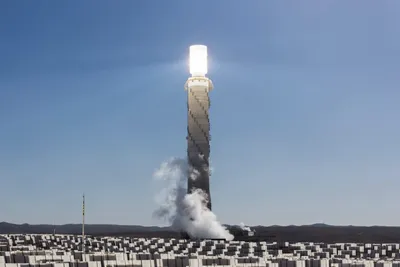
While solar PV systems can be fixed to already existing structures, larger utility-scale PV systems may require up to 3.5 to 10 acres per megawatt and CSP facilities require anywhere from 4 to 16.5 acres per megawatt.
However, the impact can be reduced by, placing facilities in low-quality areas or along existing transportation and transmission corridors.
Scarcity of Materials
Certain solar technologies require rare materials in their production.
This, however, is primarily a problem for PV technology rather than CSP technology.
Also, it is not so much a lack of known reserves as much as it is the inability of current production to meet future demand: Many of the rare materials are byproducts of other processes rather than the focus of targeted mining efforts.
Recycling PV material and advances in nanotechnology that increase solar-cell efficiency could both help boost supply, but perhaps finding material substitutes that exist in greater abundance could play a role.
An Environmental Downside of Solar Panel Production
The one environmental downside to solar technology is that it contains many of the same hazardous materials as electronics.
As solar becomes a more accessible energy, the problem of disposing the hazardous waste becomes an additional challenge.
However, assuming the challenge of proper disposal, is met, the reduced greenhouse gas emissions that solar energy offers makes it an attractive alternative to fossil fuels.
Solar panels Don’t Work for Every Roof Type
Rooftop solar panels are installed by connecting a mounting system (also known as “racking”) to your roof.
Certain roofing materials used in older or historical homes, such as slate or cedar tiles, can be difficult for solar installers to work with, throwing up a roadblock for solar power.
Additionally, many homes, and apartment buildings have skylights or other rooftop additions like roof decks that can make the solar installation process difficult or costly.
In the long run, however, this shouldn’t be a barrier to the mass adoption of solar power in the U.S. Our guide to rooftop solar systems covers the installation process in more detail.
If your home doesn’t qualify for a rooftop solar installation, you still have options: ground-mounted solar panels or buying a share in a community solar garden can get you around this disadvantage of solar energy.
Solar Doesn’t Work at Night
Some people interested in solar might wonder if, by going solar, they can live completely off the grid.
This isn’t realistic in most applications of solar technology.
While many solar companies, including SunPower, are investing in home battery storage solutions, the batteries are not quite yet a widespread option for most homeowners.
Solar energy is mostly used in real time, with any excess delivered back to the conventional utility grid.
Solar households rely on utility grids for power at night and in other situations where sunlight is limited.
However, for commercial solar users such as schools, government facilities, and businesses, this is less of a limitation thanks to SunPower’s solar + storage solutions.
Not all Solar Panels are High Quality
It’s true there is a wide variety of panels on the market with varying levels of efficiency, durability, reliability, output and design.
We strongly recommend that you do some research before selecting panels for your home or business, considering the impact of each of these factors on your system’s output and the long-term cost savings you can expect.
It’s worth it to invest in top-quality solar panels.
After all, what other technology around your home or business do you expect to still be working for you three decades from now?
We’re so confident in our panel quality that we offer a best-in-industry 25-year Power and Product Warranty for home or commercial use.
Frequently Asked Questions
How long do solar panels last?
Manufacturers back most residential panels with 25-year warranties, and the hardware itself often keeps working well past that mark. The typical annual degradation rate sits around 0.5%, meaning your system should still deliver close to 87% of its day-one output after a quarter century.
Beyond panel longevity, the inverter usually needs replacing once during that period, and keeping panels clean is the only regular maintenance task.
Do solar panels work on cloudy days?
Yes. Photovoltaic cells respond to light, not heat, so clouds reduce output rather than stop it entirely.
On an overcast day, expect roughly 10 to 25 percent of your panels’ rated capacity. For homeowners weighing the pros and cons, that reduced output is easily handled by net metering credits earned on sunny days.
If you want extra backup, pairing panels with a portable solar generator covers short-term gaps.
Are solar panels worth the upfront cost?
The upfront cost of a residential solar system has dropped significantly over the past decade. Federal tax credits, state rebates, and net metering programs can reduce the effective price by 30% or more.
Most homeowners recover their investment within 6 to 10 years through lower electricity bills, and the system continues saving money for years after that. To explore whether solar makes sense for your situation, read our article on when solar panels are worth it.
Can solar panels power an entire house?
A properly sized solar system can cover most or all of a household’s electricity needs during daylight hours. The number of panels required depends on your energy consumption, roof space, and local sunlight conditions.
Adding battery storage allows you to use solar energy at night, though batteries add to the overall cost. For many homeowners, staying connected to the grid while using solar as the primary source offers the best balance of savings and reliability.
Final Thoughts
The advantages of solar energy clearly outweigh the drawbacks for most homeowners. Solar power cuts electricity bills, reduces carbon emissions, raises property values, and draws on a resource that will not run out anytime soon.
Federal and state incentives continue to lower the barrier to entry.
The initial investment of installing solar panels is real, and issues like intermittency, roof compatibility, and energy storage deserve honest consideration. Still, costs have fallen sharply, and battery technology is improving every year.
If this article on the pros and cons of solar panels has piqued your interest, we encourage you to explore the links throughout this page and start comparing quotes from local installers.