Guides

Best Solar Industry Jobs: 11 Careers Ranked by Salary and Demand

The solar workforce topped 263,000 in the U.S. and keeps growing. These 11 solar industry jobs offer salaries from $38K to $140K+, and many do not require a college degree.

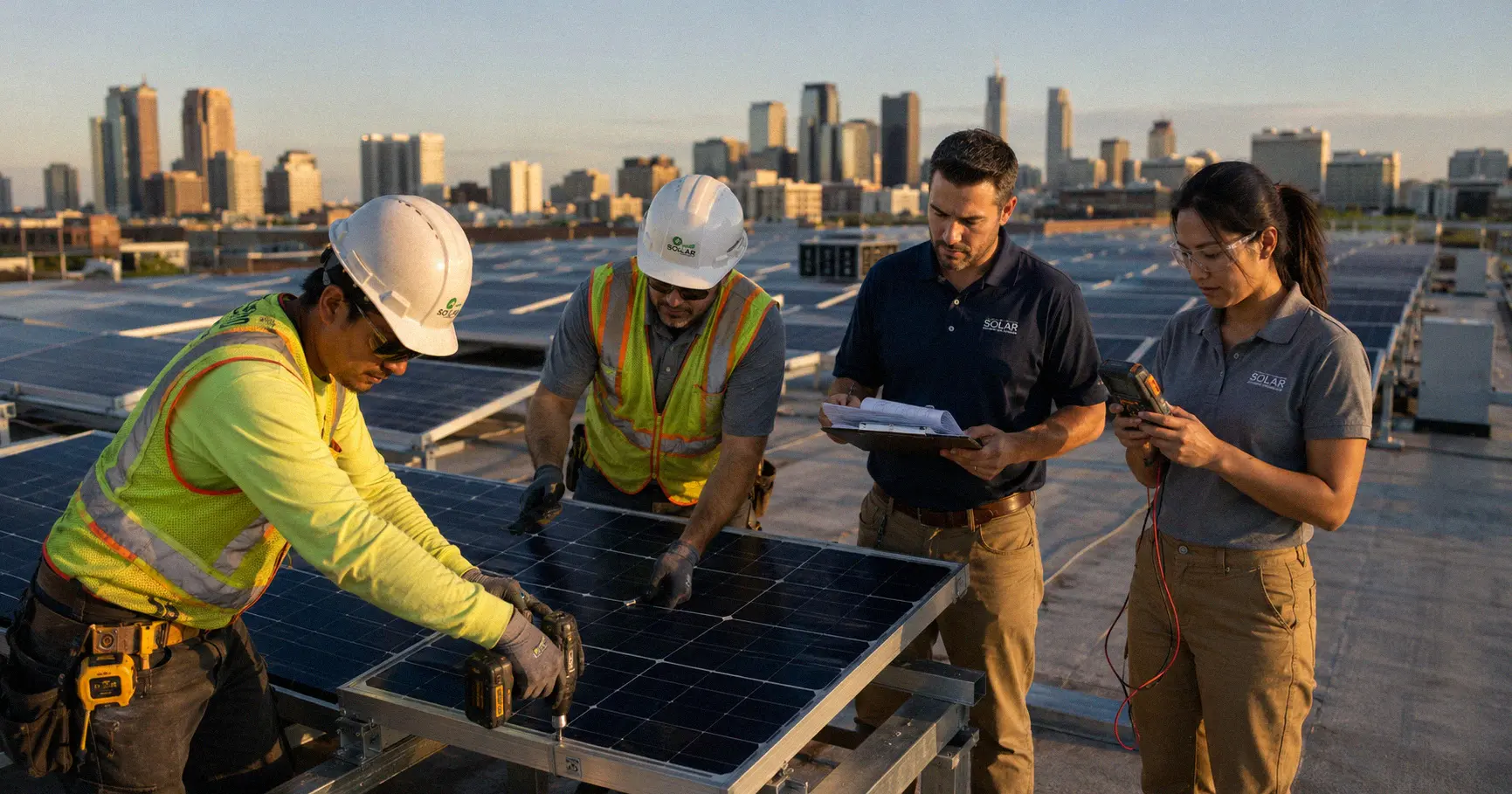
Solar energy professionals working on a large photovoltaic installation site

Disclosure: This post may contain affiliate links. As an Amazon Associate, we earn from qualifying purchases. This comes at no extra cost to you. Ratings reflect our own editorial evaluation.

Quick Answer

Solar design engineers, project managers, and sales representatives rank among the highest-paying solar industry jobs in 2026, with salaries reaching $140,000 or more. The BLS projects 42% job growth for solar PV installers through 2034, and many roles welcome candidates without a four-year degree.

The U.S. solar workforce grew past 263,000 workers in 2024, according to the National Solar Jobs Census published by IREC and the Department of Energy. That figure keeps climbing, and the gap between open positions and qualified applicants is wider than it’s ever been.

Utility-scale installations hit a record 50 gigawatts of new capacity that same year, and companies across the supply chain are competing hard for qualified candidates. Whether you’re considering your first renewable energy career or switching from a related trade, the best solar industry jobs offer a rare combination of strong pay, low entry barriers, and long-term demand.

This guide breaks down 11 solar industry jobs worth pursuing right now. Each one covers salary ranges, what you need to qualify, and the growth data that makes the role worth targeting in 2026 and beyond.

Why Solar Careers Are Booming in 2026

Record-breaking installations, federal clean energy policy, and a nationwide worker shortage are all pushing solar hiring at a pace most other industries can’t match.

The Bureau of Labor Statistics projects 42% employment growth for solar photovoltaic installers between 2024 and 2034. That rate outpaces nearly every other occupation in the federal database, with about 4,100 new openings expected each year during that period.

The Solar Energy Industries Association estimates the total solar workforce could reach 400,000 by the end of the decade if current installation trends hold.

Utility-scale and commercial projects are also growing faster than the talent pool can keep up with. Contractors in Texas, California, and Florida routinely say that finding trained workers is their biggest operational headache.

That shortage hits every layer of the solar energy industry, from entry-level installers to project managers running $50 million build-outs.

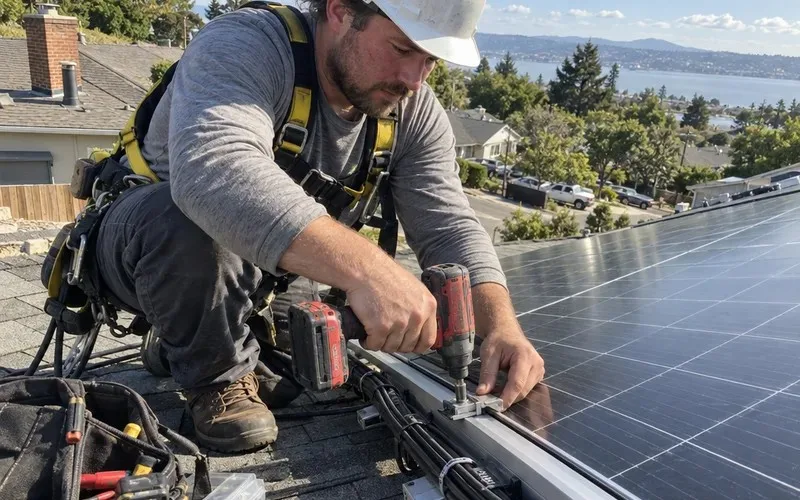
Solar panels being installed on a commercial rooftop by a crew of workers

The residential solar market continues expanding as equipment costs drop and electricity rates climb. Homeowners and businesses want panels on their roofs, and the technicians, engineers, and salespeople who deliver those systems are in short supply.

If you want to understand why solar power matters for the broader economy, the job creation story is one of the most tangible arguments.

What all of this adds up to: solar industry jobs aren’t just growing in quantity. They’re growing in variety, with new specializations in battery storage, fleet management, and grid integration that barely existed five years ago.

11 Best Solar Industry Jobs Worth Pursuing

These roles range from entry-level positions with no degree required to engineering and management tracks that clear six figures. They’re the solar industry jobs that consistently show up in hiring data with the strongest mix of salary, demand, and career mobility.

Salary ranges reflect national data from the BLS, Glassdoor, and ZipRecruiter as of early 2026.

1. Solar Design Engineer

Salary range: $80,000 to $140,000 Education: Bachelor’s degree in electrical, mechanical, or civil engineering Growth outlook: Strong

Solar design engineers create the blueprints that turn a bare roof or empty field into a functioning photovoltaic system. They use CAD software and tools like Aurora Solar or Helioscope to model panel layouts, wiring diagrams, and structural loads.

On a typical day, you’re reviewing site survey data, calculating inverter sizing, and going back and forth with permitting departments. Engineers at this level also sign off on compliance with the National Electrical Code and local building codes.

Senior design engineers at large EPC firms regularly clear $130,000 or more, especially in high-demand markets like California and the Northeast. A Professional Engineer license pushes that ceiling even higher, and most solar companies say this is one of their hardest roles to fill.

2. Solar Project Manager

Salary range: $81,000 to $118,000 Education: Bachelor’s degree preferred; experience can substitute Growth outlook: Strong

Project managers are the ones keeping utility-scale and commercial solar installations on schedule and on budget. They coordinate between design teams, subcontractors, equipment suppliers, and the client.

You’ll juggle procurement timelines, labor scheduling, and permitting milestones all at once. Most employers want candidates with PMP certification or equivalent project management credentials, though a strong track record running installations can make up for not having one.

Solar project managers who move into director-level positions at large firms can push past $140,000 in total compensation. It’s a natural fit for anyone coming from construction management or general contracting who wants to move into renewables.

3. Solar Sales Representative

Salary range: $63,000 to $145,000 (base plus commission) Education: No degree required Growth outlook: Strong

Solar sales representatives are the front line of residential and commercial solar adoption. They meet with homeowners, explain system sizing and financial benefits of solar panels, and close contracts.

Top earners in this role frequently clear $100,000 through commission structures that reward volume. Entry-level reps typically pull in between $55,000 and $65,000 in their first year, and that number climbs fast once they build a client pipeline.

Solar sales professional presenting a system proposal to a homeowner

It’s one of the most accessible high-paying solar industry jobs because you don’t need a technical degree. Strong communication skills, a willingness to knock on doors, and a basic understanding of photovoltaic economics are enough to get started.

Many solar companies run structured sales training programs that teach new hires everything from system sizing to financing options within the first 30 days.

4. Solar PV Installer

Salary range: $39,000 to $80,000 Education: High school diploma or equivalent Growth outlook: 42% through 2034 (BLS)

Solar PV installers mount panels on rooftops and ground-mounted racking systems, run electrical wiring, and connect inverters. The BLS reports a median annual wage of $51,860 for this occupation as of May 2024.

Physical fitness matters here. You’ll spend full shifts on rooftops in all kinds of weather, lifting equipment that can weigh 50 pounds or more.

A lot of employers offer paid on-the-job training, which makes this one of the fastest ways into the solar industry.

Experienced installers who earn NABCEP certification and an electrical license can advance to lead installer or crew foreman roles, where pay often reaches $70,000 to $80,000. Those looking for specific opportunities on large-scale projects can explore tips for landing solar farm jobs.

5. Solar Operations and Maintenance Technician

Salary range: $45,000 to $72,000 Education: Technical certificate or associate degree Growth outlook: Strong

O&M technicians are the people keeping existing solar arrays running at peak output. They monitor system performance through SCADA software, troubleshoot inverter faults, replace damaged panels, and handle vegetation management around ground-mounted systems.

Here’s what makes this role different: it grows in direct proportion to the installed base of solar capacity. Every megawatt deployed needs ongoing maintenance for the next 25 to 30 years, creating a demand floor that doesn’t exist in construction-only roles.

Employers typically prefer candidates with electrical training, though some hire motivated workers with strong mechanical aptitude and train them internally. Familiarity with how solar farms operate gives applicants a meaningful advantage during interviews.

6. Solar Site Assessor

Salary range: $50,000 to $78,000 Education: Associate degree or equivalent field experience Growth outlook: Moderate to strong

Solar site assessors evaluate properties before installation begins. They measure roof dimensions, check structural integrity, analyze shading patterns, and document electrical panel capacity.

Getting this right matters. An assessor who miscalculates shading losses can cause a project to underperform its production estimates by 15% or more, and that’s a problem nobody wants to explain to the customer.

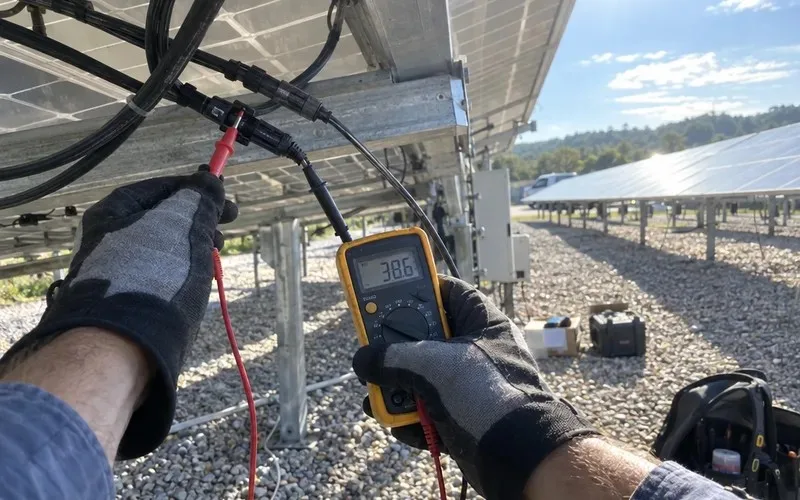
Solar technician inspecting panels at a utility-scale solar farm

The role suits candidates who enjoy fieldwork and have an eye for detail. Many assessors transition into design engineering or project management after building a strong foundation in site analysis, making it a solid stepping stone within the solar energy career ladder.

7. Solar Construction Supervisor

Salary range: $65,000 to $105,000 Education: High school diploma with construction experience Growth outlook: Strong

Construction supervisors run the crews on commercial and utility-scale solar builds. They handle safety enforcement, material deliveries, and making sure what gets built on-site matches what engineering drew up.

Experience with heavy equipment operations, concrete work, or electrical contracting transfers directly into this position. Supervisors on utility-scale sites in rural areas often receive per diem and travel allowances that add $10,000 to $20,000 in annual compensation.

OSHA 30-Hour Construction certification is a standard requirement. Candidates with both OSHA credentials and a track record of managing multi-crew job sites can negotiate starting salaries well above the median.

8. Solar Quality Assurance Specialist

Salary range: $55,000 to $90,000 Education: Associate or bachelor’s degree in engineering or related field Growth outlook: Moderate

QA specialists show up after the install is done to verify everything meets design specs, safety standards, and code. They document deficiencies, coordinate rework, and sign off on systems before interconnection.

You’ll need deep familiarity with the NEC, local electrical codes, and manufacturer installation guidelines. Strong documentation skills matter just as much since inspection reports become permanent records tied to each project’s warranty.

Specialists who earn the NABCEP PV System Inspector certification command premium rates, particularly as a growing number of jurisdictions require third-party inspections before granting permission to operate.

9. Solar Fleet Manager

Salary range: $62,000 to $95,000 Education: Bachelor’s degree or equivalent experience Growth outlook: Strong

Fleet managers watch over portfolios of operating solar assets that can span dozens or even hundreds of individual sites. They track energy production, manage O&M contracts, and report financial performance to asset owners and investors.

It’s a role that blends technical knowledge with business sense. Fleet managers need to read performance data fluently, understand degradation curves, and flag warranty claims when equipment underperforms.

Professional reviewing solar energy production data on multiple monitors

This one’s growing fast because the U.S. now has over 200 gigawatts of installed solar capacity, and every megawatt needs someone watching the numbers. If you’d rather analyze data and manage contracts than climb on rooftops, this is your role.

10. Manufacturing Technician

Salary range: $38,000 to $58,000 Education: High school diploma or technical certificate Growth outlook: Moderate

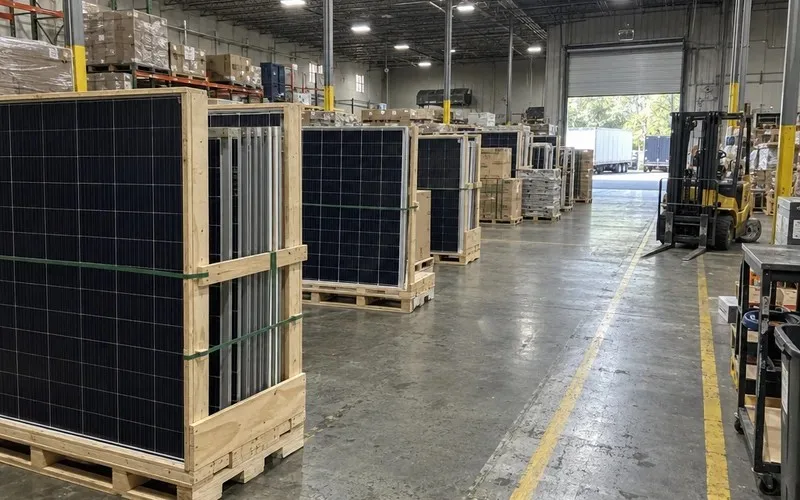
Manufacturing technicians work in factories that produce solar panels, inverters, racking systems, and balance-of-system components. They operate production equipment, perform quality checks on finished goods, and maintain assembly line machinery.

Domestic solar manufacturing has grown fast as federal incentives, including production credits tied to the Inflation Reduction Act, push more production back to the U.S. Facilities in Georgia, Ohio, and Texas have added thousands of manufacturing positions in the past two years.

You don’t need much to get started. Most manufacturers run structured training programs that take new hires from zero experience to full productivity within a few months.

Workers with CNC operation or electronics assembly experience have a clear leg up.

Among entry-level solar industry jobs, manufacturing technician roles offer the most predictable schedule and indoor working conditions. That combination appeals to candidates who want to work in renewable energy but prefer a factory setting over outdoor fieldwork.

11. Battery Storage Specialist

Salary range: $55,000 to $95,000 Education: Technical certificate or associate degree in electrical technology Growth outlook: Very strong

Battery storage specialists install, commission, and maintain lithium-ion battery systems paired with solar arrays. They work on residential units like the Tesla Powerwall and large-scale commercial storage systems that smooth grid demand.

It’s one of the fastest-growing niches in the broader solar industry. Utility-scale storage deployments doubled year over year in 2024, and the residential storage market keeps expanding alongside the push toward grid independence.

Specialists who understand both solar PV and battery management systems can command salaries near the top of the range. The combination of electrical skills and software fluency makes this role harder to fill than standard installation positions, which translates into stronger bargaining power for qualified candidates.

If you’re looking for the solar industry job with the strongest long-term growth curve, battery storage is it. Every major solar installer now offers storage as a standard add-on, and that trend isn’t slowing down.

Solar Job Salary Comparison

The table below puts all 11 roles side by side so you can compare earning potential at each career stage.

RoleEntry-LevelMid-CareerSenior
Solar Design Engineer$80,000$105,000$140,000+
Solar Project Manager$81,000$95,000$118,000+
Solar Sales Rep$63,000$100,000$145,000+
Solar PV Installer$39,000$52,000$80,000+
O&M Technician$45,000$58,000$72,000+
Solar Site Assessor$50,000$62,000$78,000+
Construction Supervisor$65,000$82,000$105,000+
QA Specialist$55,000$70,000$90,000+
Solar Fleet Manager$62,000$78,000$95,000+
Manufacturing Technician$38,000$47,000$58,000+
Battery Storage Specialist$55,000$72,000$95,000+

Salary data compiled from BLS, Glassdoor, and ZipRecruiter as of May 2026.

What Solar Job Pays the Most Without a Degree?

Solar sales representative. With commission-based pay, reps who never attended college routinely clear $100,000 per year.

That makes it the highest-earning solar career that doesn’t require formal education.

How To Get Hired Without a Four-Year Degree

Five of the 11 roles listed above are open to candidates without a bachelor’s degree. Solar PV installer, sales representative, construction supervisor, manufacturing technician, and battery storage specialist positions all prioritize hands-on skills and certifications over academic credentials.

The most direct path into solar careers is an apprenticeship through a Department of Labor-registered program. Organizations like IREC maintain directories of approved solar training providers across all 50 states, and many programs pay a wage while you learn.

Community colleges in solar-heavy states offer certificate programs that can be completed in under a year. Programs at Lane Community College in Oregon and Austin Community College in Texas focus specifically on photovoltaic installation and design.

These certificates carry real weight with employers and often count toward NABCEP eligibility requirements.

Student practicing solar panel wiring during a hands-on training course

Veterans have an additional advantage through the Solar Ready Vets Network, supported by the Department of Energy. The program connects military personnel transitioning to civilian careers with solar employers who value discipline, technical aptitude, and safety training.

Bottom line: a four-year degree isn’t a prerequisite for well-paying solar industry jobs. The fastest path from zero experience to a $50,000-plus salary typically runs through a combination of trade training, OSHA certification, and six to twelve months of field work.

How Long Does It Take to Start a Solar Career?

Most people move from zero experience to an entry-level solar position within three to six months. A short certificate program or registered apprenticeship, combined with OSHA 10-Hour safety training, is typically enough to qualify for installer or construction crew openings.

Certifications That Give You an Edge

Three certifications keep showing up in solar job postings no matter where you look.

NABCEP PV Installation Professional (PVIP) is the gold standard for solar installers. It requires 58 hours of advanced training, documented field experience, and a passing score on a 70-question exam.

The exam fee is $500, and certified professionals earn 10% to 20% more than uncertified peers on average.

OSHA 10-Hour and 30-Hour Construction certifications are required for nearly every field position in commercial and utility-scale solar. The 10-hour course covers basic hazard awareness, while the 30-hour version adds supervisor-level safety management content.

State Electrical Licenses are mandatory in many states for workers who perform electrical connections on solar systems. Requirements vary by state, so check your local regulations before investing in training.

A journeyman electrician license paired with NABCEP credentials positions candidates for the strongest roles in the field.

Knowing the broader benefits of solar panels also helps during interviews. Employers want candidates who can speak fluently about the technology they are installing, not just the technical specifications.

States Hiring the Most Solar Workers

California, Texas, Florida, New York, and Massachusetts lead the country in solar employment. Hiring clusters in these states where installation markets are strong and clean energy policies support sustained growth.

California leads the nation with the largest share of solar jobs. High electricity rates and aggressive renewable portfolio standards keep demand for installers, engineers, and sales reps consistently elevated.

Texas has emerged as the second-largest solar employer, driven by utility-scale projects in west and central Texas. Per diem packages for traveling crews make construction roles especially lucrative in this market.

Florida ranks among the top five for residential solar growth. The combination of abundant sunlight and rising insurance costs has made solar-plus-storage a popular option for homeowners across the state.

New York and Massachusetts round out the top hiring markets, supported by state-level incentive programs like NY-Sun and SMART. These markets tend to pay higher base salaries to offset the elevated cost of living.

Aerial view of a utility-scale solar farm in a rural landscape

If you’re willing to relocate or travel for utility-scale projects, your options open up considerably. Most large EPC firms cover travel costs and offer housing stipends for remote job sites.

Geographic flexibility is one of the biggest salary multipliers for solar industry jobs. A solar PV installer earning $50,000 in a low-cost state can clear $65,000 or more by taking a traveling position with per diem.

Understanding why solar power is important at the national level also helps candidates frame their experience in terms that resonate with hiring managers during interviews.

Frequently Asked Questions

Solar design engineers and solar sales representatives with strong commission records both regularly earn $140,000 or more per year. Engineering roles offer more stable base salaries, while sales positions have higher upside potential for top performers.

Yes. Solar PV installer, sales representative, construction supervisor, manufacturing technician, and battery storage specialist roles are all accessible without a four-year degree. Certifications like NABCEP PVIP and OSHA 30-Hour carry more weight than a diploma in most hiring decisions.

The BLS projects 42% employment growth for solar PV installers between 2024 and 2034, which puts it among the fastest-growing occupations in the country. The broader solar workforce already exceeds 263,000 and should keep expanding as installed capacity increases.

Installed solar systems need maintenance for 25 to 30 years after deployment. That built-in demand for O&M technicians, fleet managers, and QA specialists provides a floor of job security that pure construction roles can't match. On top of that, the expansion of battery storage keeps creating career tracks that didn't exist five years ago.

Jake Harmon
Jake Harmon
Solar Energy Specialist

I put a 6kW system on my own roof in 2019 and spent months comparing panels, inverters, and batteries before buying anything. That research habit stuck. Now I test solar products full time and write up the ones worth your money.

More about Jake Harmon →