 SolarPowerNerd

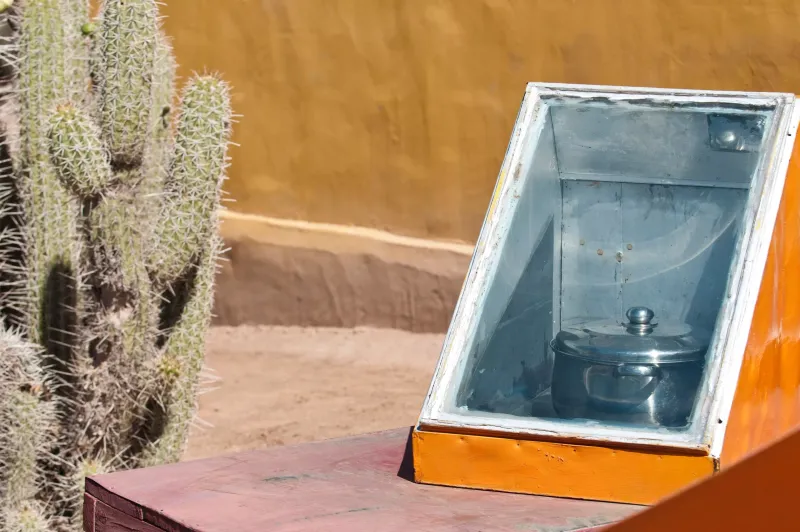
Solar ovens don’t take the winter off. On a clear day with decent sun, they can reach cooking temperatures even when the air outside is freezing.
Here’s exactly what to expect and how to get the best results in cold weather.
Winter Temperatures for Solar Ovens
Sunlight determines how hot your oven gets. On a very sunny winter day, expect temperatures over 300 degrees Fahrenheit.
Cloudy days bring that down closer to 200 degrees. As long as there’s some sunlight, the oven works.
The sun’s rays are strong enough to heat a solar oven even when air temperatures are low. You can bake cookies, roast a chicken, or make stew in the middle of winter.
Solar ovens function on cloudy days too, just with longer cook times and lower peak temperatures.
Can a Solar Cooker Work in Winter?
Solar cookers can be quite effective in winter with a few extra precautions. First, make sure your cooker is well insulated to keep heat from escaping.
Second, position it in a sunny spot, ideally a south-facing location with no shade. Third, use a reflector to direct more sunlight onto the cooking chamber.
Follow these tips and you can cook successfully even in the coldest months. Check out the best solar ovens for models built to handle winter conditions.
Sunshine Matters More Than Air Temperature
You might think solar ovens only work on hot days, but that’s not true. The amount of direct sunlight matters far more than how cold the air feels.
Colder temps do increase cooking time, though. On cloudy days, pick recipes that don’t need long cook times for the best results.
Solar ovens can be surprisingly effective cooking tools even in less-than-ideal weather. Understanding how solar energy works helps explain why sunlight intensity is the key factor.
How Do Solar Ovens Work?
Solar ovens trap sunlight inside a dark, insulated box. The sunlight hits the dark surface and converts into heat, which cooks the food inside.
They don’t use any electricity or gas, making them great for off-grid cooking, camping, and emergencies.
Building a basic one is simple. All you need is a dark box, some black paint, and aluminum foil.
With these few materials, you can harness the sun’s energy to cook a full meal.
Three Types of Solar Ovens
Three types of solar ovens are available: parabolic, box, and panel.
Parabolic solar ovens are the most expensive and most effective, reaching up to 550 degrees Fahrenheit.
Box solar ovens cost less and reach up to 200 degrees Fahrenheit. They’re the most popular for home use.
Panel solar ovens are the cheapest option but only reach about 150 degrees Fahrenheit. All three types rely on sunlight to heat food or water placed inside them.
Can You Cook Multiple Things at Once in a Solar Oven?
Yes, you can cook multiple items at the same time in a solar oven. Since they only need sunlight for fuel, they’re very efficient at handling more than one dish.
Solar ovens reach high enough temperatures to cook multiple items evenly. For example, you could put a pot of stew on one shelf and a pan of bread on another.
What Is the Best Cooking Temperature Range for a Solar Oven?
The ideal range is between 300 and 400 degrees Fahrenheit. This lets you cook most foods without burning them.
Solar ovens can hit these temperatures within minutes, so keep an eye on your food. Always place items in the center of the oven for even cooking.
Make sure the oven sits in direct sunlight, not shade. With a little practice, you’ll be turning out great meals using nothing but the sun.
Wind Is Likely to Be a Factor
Wind can seriously affect solar oven performance. Solar ovens need still air to work effectively, and gusts cause the internal temperature to drop.
This lengthens cooking time or prevents food from cooking through. A windscreen helps solve this problem.
Build a simple windscreen from cardboard or aluminum foil. Just make sure it doesn’t block sunlight from reaching the oven.
With that protection in place, you can cook well even on breezy days.
What Is the Highest Temperature a Solar Oven Can Reach?
The highest temperature depends on the oven type. Standard box models top out around 400 degrees Fahrenheit.
Parabolic models can push past 550 degrees.
Both ranges are more than hot enough to cook virtually any food item. For solar-powered camping gear, a solar oven makes a great companion.
Frequently Asked Questions
Can you bake bread in a solar oven during winter?
Yes, you can bake bread in a solar oven on a sunny winter day. Box and parabolic ovens easily reach the 350 degrees Fahrenheit needed for bread.
Position the oven in direct sunlight, use a dark baking pan, and allow extra time compared to summer. Insulation and a windscreen improve results.
How long does it take to cook a meal in a solar oven?
Cooking times are roughly double what a conventional oven requires. A casserole that takes one hour indoors might need two hours in a solar oven.
Winter cooking adds more time due to lower sun angles and shorter daylight hours. Planning meals with simple, slow-cooking recipes works best for consistent results.
Do solar ovens work in snow?
Solar ovens work fine when there’s snow on the ground, as long as direct sunlight reaches the cooking chamber. Snow can actually help by reflecting extra light into the oven, boosting temperatures slightly.
Clear the oven surface of any snow buildup and position it where drifts won’t block the sunlight path.
What foods cook best in a solar oven?
Stews, soups, rice, beans, and roasted vegetables all cook very well in solar ovens because they tolerate longer, slower cooking times. Baked goods like bread and cookies work in parabolic and box models.
Avoid foods that need precise temperature control or quick high-heat searing, as solar ovens can’t replicate those conditions.
Final Thoughts
Solar ovens get plenty hot in winter, easily reaching 200 to 300-plus degrees on sunny days. The key factors are direct sunlight, good insulation, and wind protection.
With a little practice and the right setup, you can cook full meals using nothing but the sun, even in the coldest months of the year.