 SolarPowerNerd

The solar industry crossed $300 billion in global revenue in 2025. Rooftop panel advertisements promise thousands in annual savings and a greener footprint.
But the financial reality? It’s far messier than any sales pitch suggests. Nearly one in four homeowners who request solar quotes walk away after running the actual numbers.
Here are 10 legitimate reasons solar panels fail as an investment for certain homeowners. No scare tactics or industry spin — just honest math that could save you tens of thousands of dollars.
Every situation is different, and solar panels genuinely work well for millions of homeowners. But knowing when solar panels are not worth it protects your finances just as much as knowing when they are.
The Upfront Cost Is a Serious Financial Barrier
Most homeowners spend $15,000 to $25,000 out of pocket for a residential photovoltaic system even after the federal tax credit.
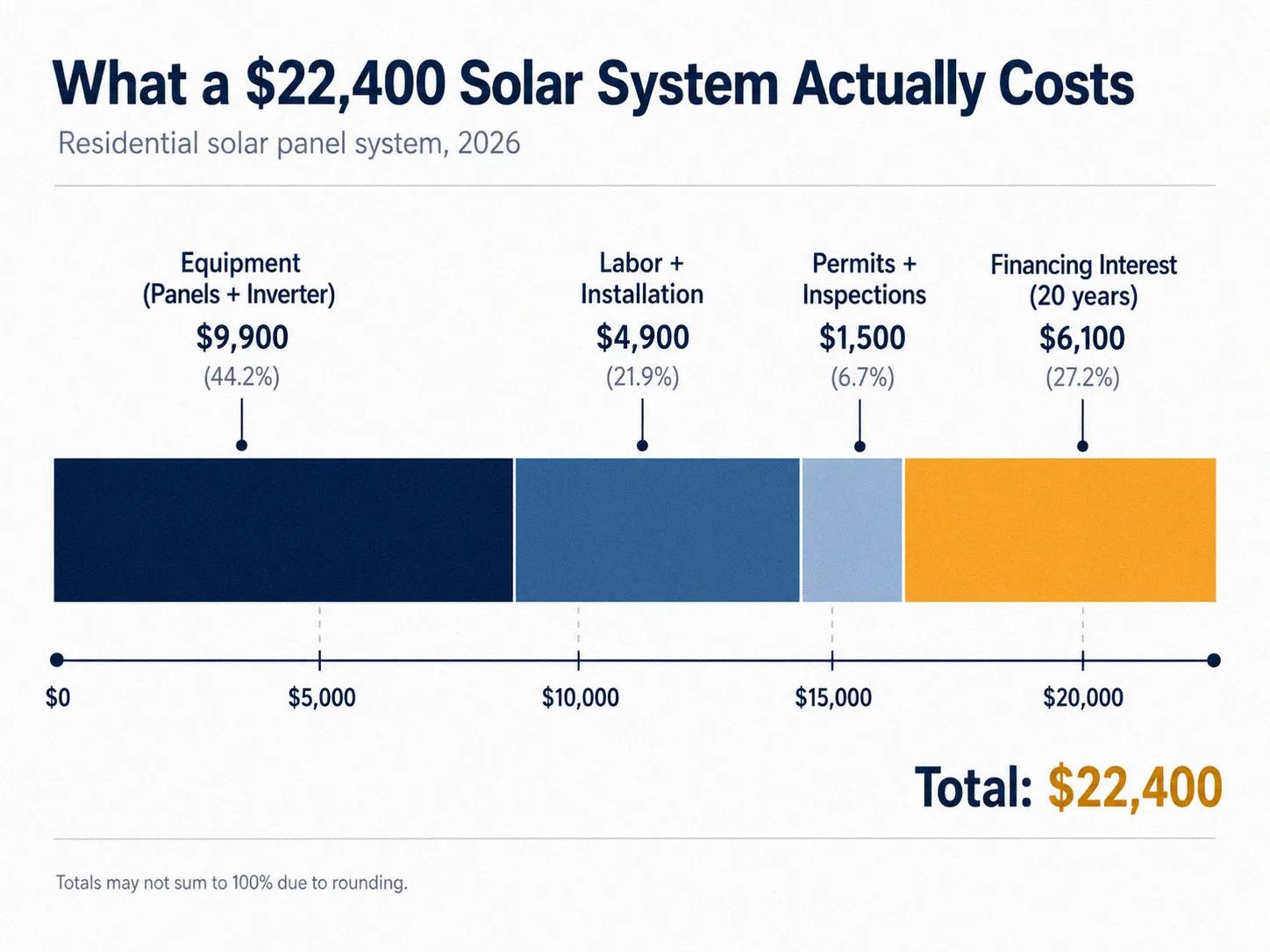
A residential solar system costs between $18,000 and $35,000 before any incentives in 2026. The national average for a standard 8kW installation lands around $22,400 according to the U.S. Energy Information Administration.
Sure, the 30% federal Investment Tax Credit (ITC) helps — but only if you owe enough federal income tax to claim it. On a $22,400 system, that’s a $6,720 credit, still leaving you with $15,680 out of pocket.
Plenty of middle-income homeowners can’t even use that full credit in a single tax year. And solar loans? They stretch the cost over 15 to 25 years while tacking on 20% to 40% in interest charges.
A $20,000 system financed at 6.5% APR over 20 years costs roughly $27,800 in total. That extra $7,800 eats directly into your projected savings.
Leases and Power Purchase Agreements (PPAs) eliminate the upfront payment entirely. The tradeoff? You hand over the tax credit, ownership equity, and most of the long-term financial upside to the leasing company.
For homeowners weighing where to allocate $15,000 or more, that capital might deliver faster returns through insulation upgrades, a heat pump installation, or a high-yield savings vehicle. Understanding the true cost of a properly sized system is the essential first step before committing.
Your Roof Might Disqualify You Entirely
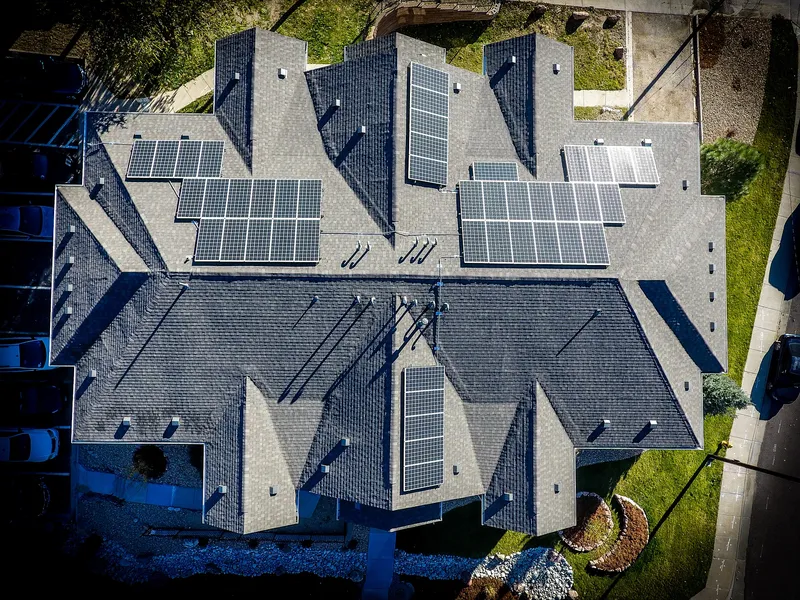
Here’s something most solar ads gloss over: not every roof can physically support solar panels. Structural integrity, age, material type, pitch angle, and shading all determine whether your roof even qualifies.
South-facing roofs with a pitch between 15 and 40 degrees capture the most direct sunlight in the Northern Hemisphere. East- or west-facing roofs produce 10% to 20% less energy annually.
North-facing roofs? Basically a nonstarter. And if your roof is older than 10 years, it probably needs replacement before panels go on.
Removing and reinstalling a solar array for a mid-life roof replacement runs $1,500 to $6,000. Most installers won’t mention this expense during the initial pitch.
Shade is another deal-killer. Trees, chimneys, neighboring buildings, and dormers all cut production capacity, and even partial shading across a single panel can drag an entire string inverter circuit’s output down by 20% to 40%.
Microinverters mitigate this issue but add $1,000 to $3,000 to the system cost. Many homeowners don’t realize the extent of their shading problem until after an expensive site assessment.
Each standard panel measures about 5.5 by 3.25 feet, and the space requirement catches many homeowners off guard.
A typical 8kW system needs 20 panels and approximately 350 square feet of unobstructed, continuous roof space. Complex rooflines with dormers, vents, skylights, and multiple angles drastically reduce usable area.
If your roof faces north, carries heavy shade, or needs replacement within the next decade, solar installation creates more financial problems than it solves.
Net Metering Policies Keep Getting Worse
Net metering — the billing policy that credits you for sending surplus solar electricity back to the grid — is being slashed or eliminated in a growing number of states.
Utilities used to credit solar homeowners at full retail rates for every surplus kilowatt-hour. Those days are fading fast.
California’s NEM 3.0 policy, enacted in April 2023, slashed export credits by approximately 75%.
Homeowners who previously earned $0.30 per exported kWh now receive as little as $0.05 during off-peak hours. California is not an outlier in this trend.
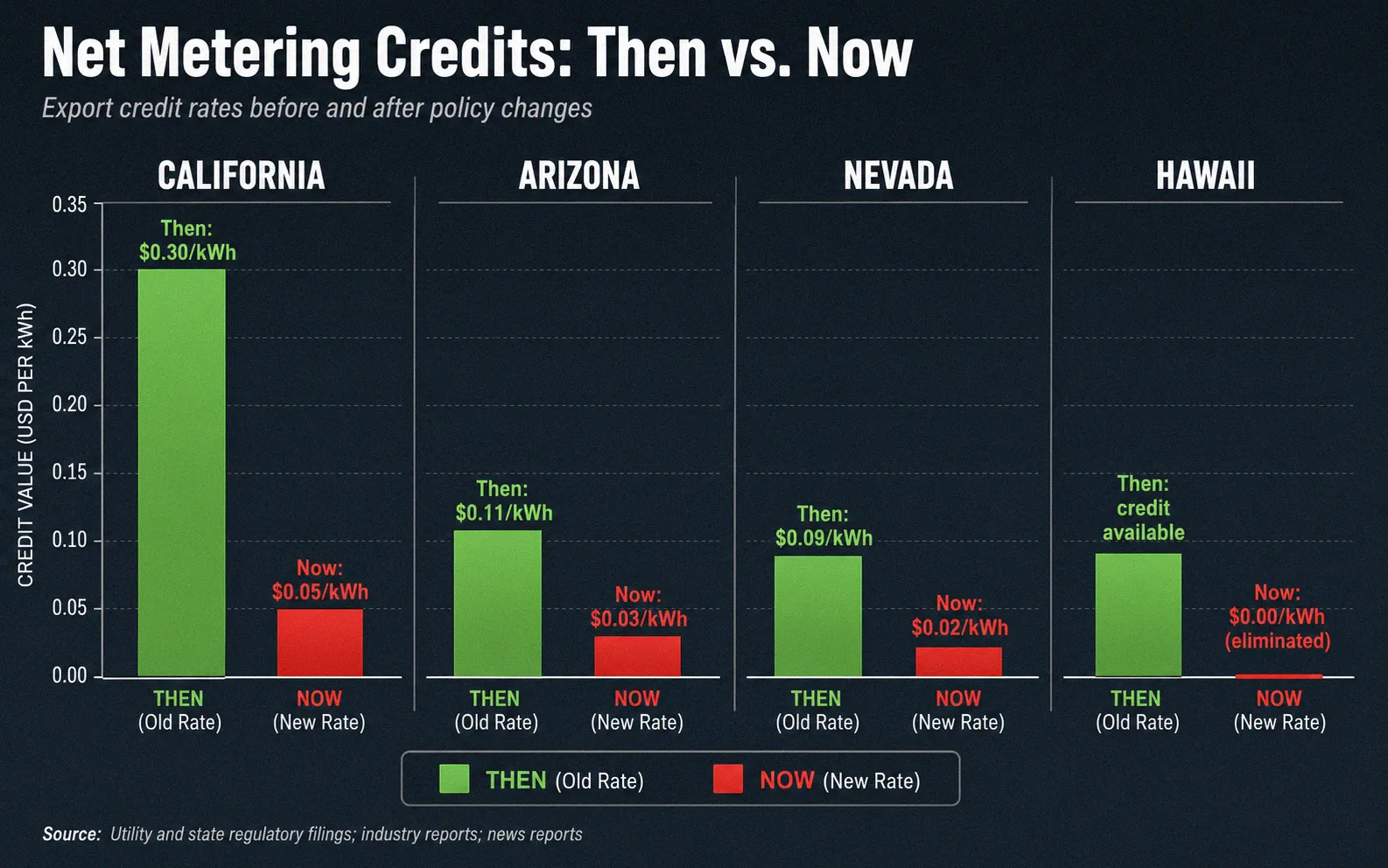
Arizona, Nevada, Hawaii, Indiana, and several other states have reduced or restructured their net metering programs. The Database of State Incentives for Renewables and Efficiency (DSIRE) shows a clear national trend toward less generous export compensation.
Under reduced net metering, your surplus solar energy earns $0.04 to $0.08 per kWh instead of $0.15 to $0.30. That single policy change can add 3 to 5 years to your payback timeline.
Without strong net metering, solar panels only save meaningful money on electricity you consume directly during daylight hours. Any overproduction becomes nearly worthless unless you invest an additional $10,000 to $15,000 in battery storage to capture it for evening use.
The writing is on the wall. More utilities are shifting to time-of-use rate structures and reduced buyback rates, which makes solar panels a riskier long-term bet if you’re counting on export revenue to justify the cost.
The Payback Period Is Longer Than Advertised
The real solar panel payback period is 8 to 12 years for most homeowners — and often longer once you include maintenance, equipment replacement, and panel degradation.
Solar installers love quoting 6- to 8-year payback periods in their proposals. The real-world numbers? They tell a very different story for a lot of homeowners.
The national average payback period falls between 8 and 12 years according to the National Renewable Energy Laboratory (NREL). In states with low electricity rates, weak incentives, or diminished net metering, that timeline extends to 15 or even 20 years.
Let’s run through the actual math. A $22,000 system after the 30% ITC costs $15,400.
If you save $1,200 annually on electricity, your breakeven point is 12.8 years. Factor in a string inverter replacement at year 10 to 12 ($1,500 to $3,000) and the timeline stretches past 14 years.
On top of that, panel degradation chips away at your returns. Manufacturers only guarantee 80% to 85% of original output at year 25, meaning your annual savings decline by roughly 0.5% to 0.7% each year.
Year one savings of $1,200 shrink to approximately $1,115 by year 10 and $1,035 by year 20. Then there’s the opportunity cost, which most people overlook entirely.
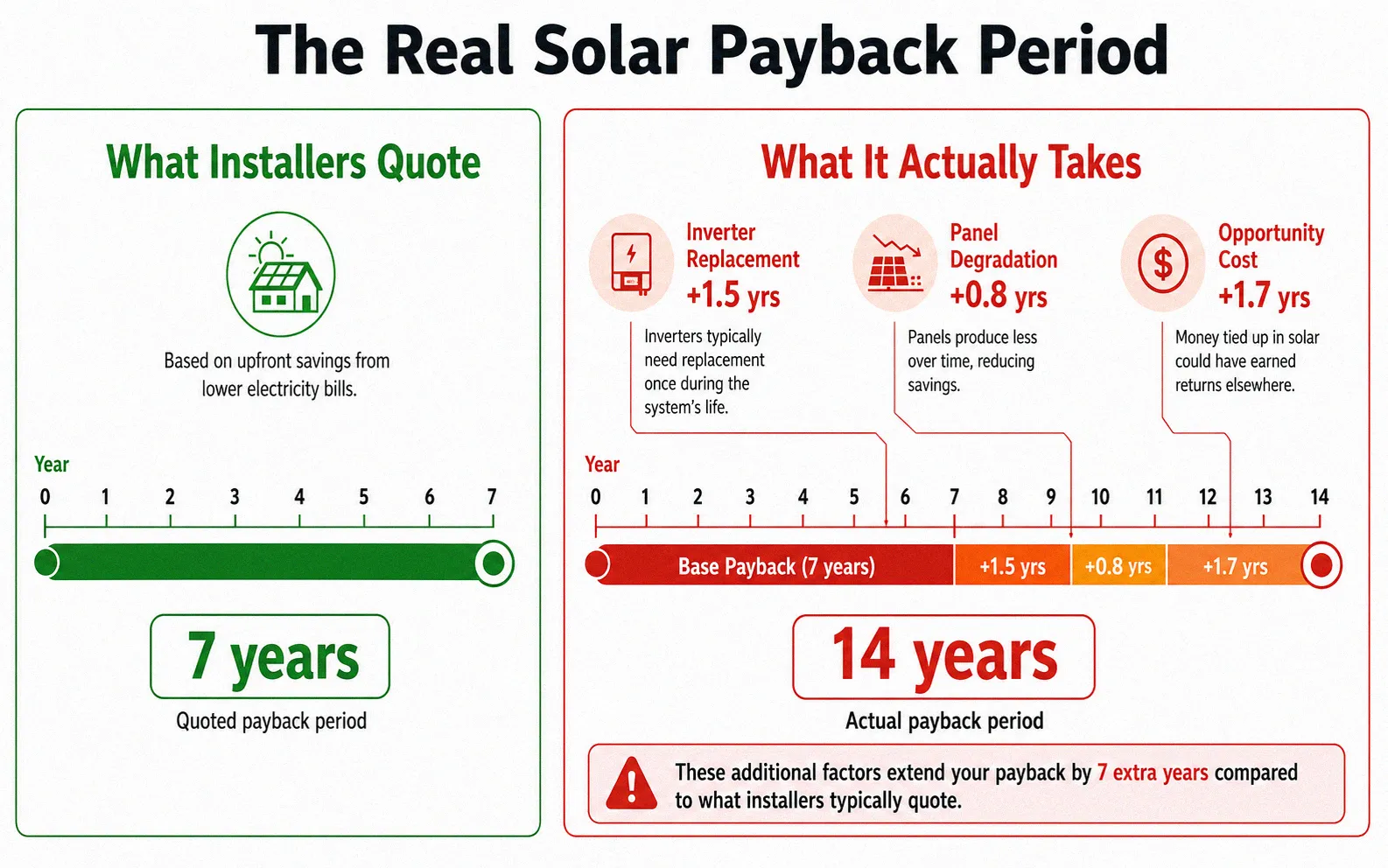
Investing $15,400 in a diversified index fund averaging 8% annual returns generates roughly $33,200 over 15 years. Compare that to cumulative solar savings of $16,800 to $18,000 over the same period.
Solar companies rarely include degradation, inverter replacement, and opportunity cost in their payback projections. Those omissions make the quoted timeline look substantially better than reality.
A homeowner in North Dakota paying $0.10 per kWh faces a payback period exceeding 18 years. Meanwhile, the same system in Massachusetts at $0.28 per kWh breaks even in under 7 years, proving that geographic location alone can determine whether solar panels are worth the investment.
Selling Your Home Before Breakeven Means Losing Money
Put simply, if you move before your solar panels pay for themselves, the next homeowner gets the financial benefit — not you.
The average American homeowner stays in their home for approximately 13 years according to the National Association of Realtors. If your solar payback period is 10 to 12 years, you barely recover your investment before a typical move.
Research from the Lawrence Berkeley National Laboratory suggests solar panels increase property values by roughly $4 per watt of installed capacity. For an 8kW system, that translates to a $32,000 premium in theory.
But in practice, those premiums vary wildly by market, buyer awareness, and whether the system is owned or leased. Leased panels create the biggest headache by far.
Prospective buyers must agree to assume the remaining lease terms, and many refuse. Real estate agents consistently report that leased solar systems slow transactions and occasionally kill deals entirely.
Even owned systems face challenges in certain markets. Buyers in low-electricity-rate regions may not value the panels highly enough to offset your remaining investment.
If you paid $15,400 after incentives and sell 6 years later, you’ve recovered perhaps $7,200 in electricity savings. Recouping the remaining $8,200 through a higher sale price is uncertain at best.
If relocation falls within your 7-year horizon, solar panels carry serious financial risk. The return flows to the next occupant, not to you.
You’ll hear solar advocates argue the property value bump offsets this risk. That might hold in expensive-electricity markets, but it falls apart where panels add little buyer appeal.
Solar panel appraisals remain inconsistent industry-wide. Many appraisers lack training to value rooftop systems, so the premium you expect may never materialize.
Why are homeowners removing their solar panels?
Common reasons include persistent roof leaks from faulty installation, unexpected maintenance costs, relocation before breakeven, and frustration with declining output after years of degradation. Homeowners stuck in unfavorable lease agreements also drive removal rates up.
Panel Efficiency Drops Every Single Year
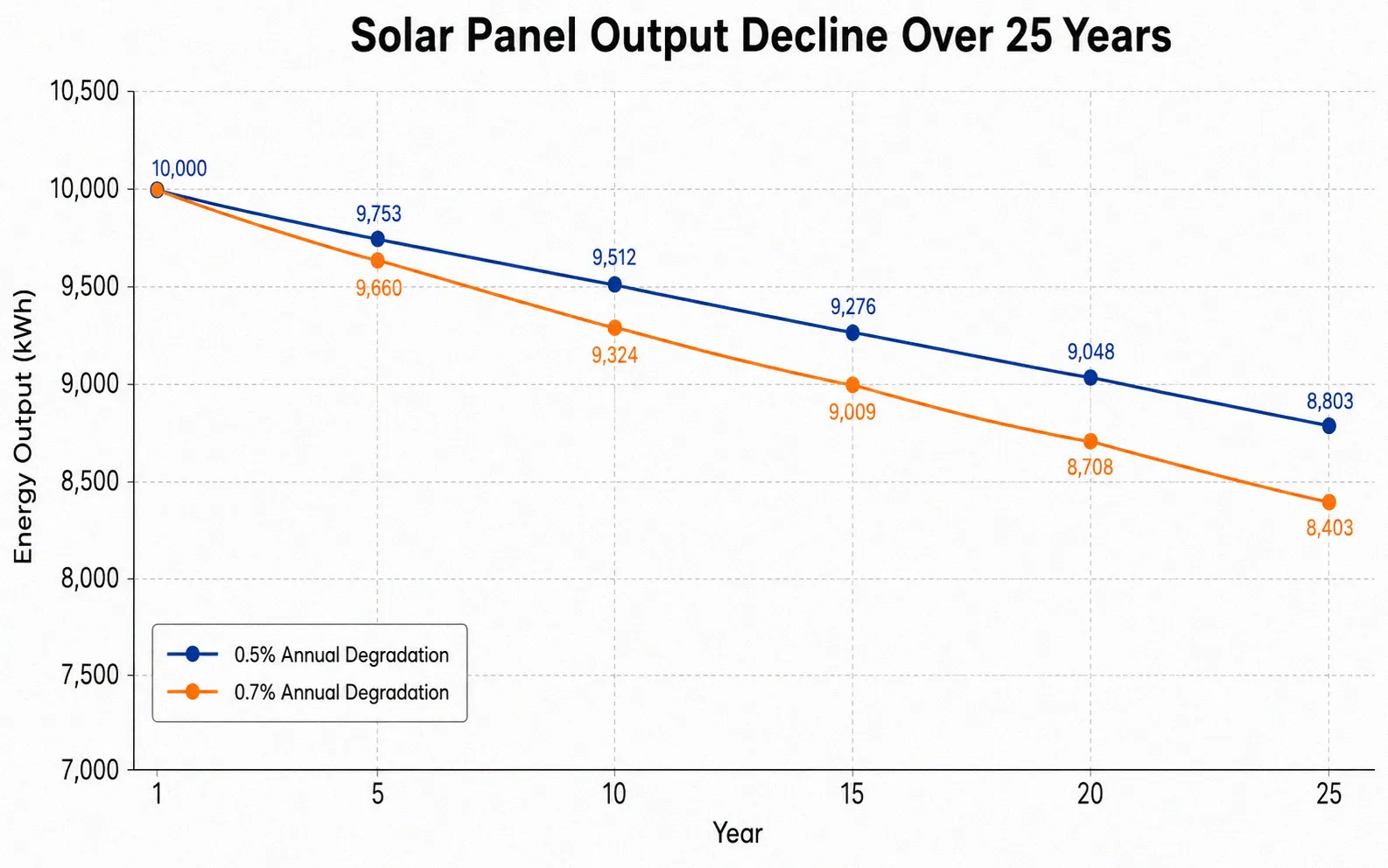
Solar panels lose between 0.5% and 0.7% of their rated output capacity annually through a process called light-induced degradation. A system producing 10,000 kWh in its first year will generate roughly 9,300 kWh by year 10 and 8,500 kWh by year 20.
This degradation rate is baked into every manufacturer’s performance warranty. The industry standard guarantees only 80% to 85% of original nameplate capacity at year 25.
That’s a 15% to 20% permanent production loss baked right into the deal. And if you live somewhere hot, the decline speeds up even more.
Panels in Arizona, Texas, and Florida degrade faster because of sustained temperatures above 90 degrees Fahrenheit. It’s an ironic catch-22: the sunniest regions that produce the most raw energy also see the steepest efficiency losses over time.
Microcracking from thermal cycling, potential-induced degradation from moisture exposure, and cumulative UV damage compound across decades. You can optimize panel positioning and maintenance to slow the curve, but you cannot stop it.
Low Electricity Rates Destroy the Math
Solar savings are directly proportional to your current electricity costs. If your utility charges less than $0.12 per kWh, the return on investment rarely justifies the expense.
States like Louisiana ($0.094/kWh), Idaho ($0.098/kWh), Mississippi ($0.10/kWh), and Arkansas ($0.10/kWh) have among the lowest residential electricity rates in the nation. At $0.10 per kWh, a $15,400 system (after ITC) generating 10,000 kWh annually saves just $1,000 per year.
That produces a 15.4-year payback period before accounting for degradation, maintenance, or inverter replacement. Compare that to Connecticut ($0.29/kWh), Massachusetts ($0.28/kWh), or California ($0.27/kWh).
That same system saves $2,700 to $2,900 per year in those markets and breaks even in 5 to 6 years. Bottom line: your electricity rate is the single biggest factor in whether solar panels make financial sense.
No amount of rooftop sunshine, manufacturer warranties, or government incentives can overcome fundamentally cheap grid power. Before requesting any installation quotes, pull your last 12 monthly utility statements and calculate your true average cost per kilowatt-hour.
Hidden Costs Nobody Warns You About
Between inverter replacements, insurance hikes, and ongoing maintenance, solar owners face $5,000 to $15,000 in extra costs that never show up in a sales estimate.
The sticker price of a solar energy system doesn’t tell the whole story. There are recurring and unexpected costs over the 25-year lifespan that steadily eat into your projected savings.
For starters, you’ll almost certainly need to replace the string inverter. These units convert DC panel output to usable AC power and only last 10 to 15 years.
Replacement runs $1,500 to $3,000 installed, and the cost catches many solar panel owners off guard because it falls outside the original purchase warranty. Microinverters last longer but cost more upfront and still require eventual service.
Ongoing tree maintenance becomes necessary if nearby vegetation grows into your panels’ solar window. Professional trimming costs $200 to $800 annually depending on tree species, height, and proximity to the array.
Homeowner insurance premiums may increase with solar panels on the roof. Many carriers raise rates by $10 to $25 per month to cover the rooftop equipment against wind, hail, fire, and theft.
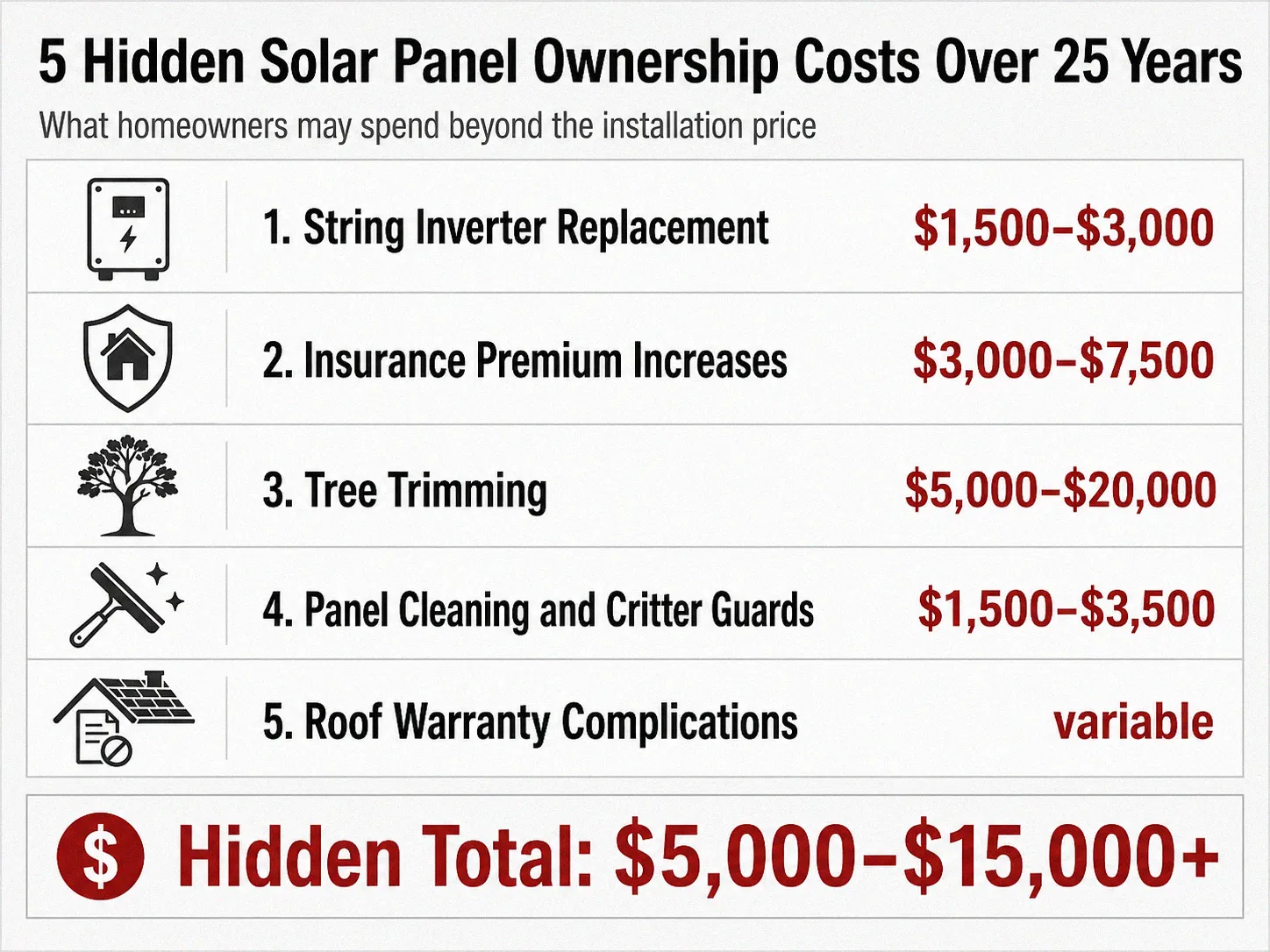
Panel cleaning in dusty, pollen-heavy, or bird-populated environments costs $150 to $350 per service. Critter guards to prevent squirrel, bird, or rodent nesting under the array add $800 to $2,000 as a one-time installation.
Then there’s the roof warranty issue. Panel mounting penetrations can void sections of your existing roof warranty unless the installer provides a separate workmanship guarantee covering those specific points.
None of these costs appear in a solar company’s savings estimate. Over 25 years, they add $5,000 to $15,000 to your total expenditure.
The Environmental Tradeoffs Are Real
Yes, solar panels reduce carbon emissions during decades of operation. But the manufacturing, transportation, and disposal sides of the equation come with real environmental costs that don’t get talked about enough.
Manufacturing requires mining quartz, processing silicon above 3,000 degrees Fahrenheit, and chemical treatments with hydrochloric acid and sulfuric acid. Most production happens in China, where the grid still runs heavily on coal.
The energy payback period — how long a panel takes to produce as much energy as its manufacturing consumed — ranges from 1 to 4 years depending on location and technology.
In northern climates with limited sun, that figure stretches toward 4 years. A panel in Seattle takes far longer to offset its manufacturing footprint than one in Phoenix.
End-of-life disposal presents a growing challenge. The International Renewable Energy Agency (IRENA) projects 78 million metric tons of cumulative solar panel waste globally by 2050.
Current recycling infrastructure recovers only a fraction of valuable materials like silver, silicon, and copper. Most decommissioned panels today end up in standard landfills.
Does all of this make solar panels environmentally harmful on balance? No. They still produce dramatically cleaner energy than fossil fuels over their full lifecycle.
But calling residential solar a purely green decision oversimplifies the picture. Homeowners should weigh whether their money reduces more carbon through rooftop installation or through utility-scale renewable projects.
Better Alternatives Might Exist for Your Situation
Before committing $15,000 or more to rooftop panels, evaluate whether other energy solutions deliver stronger returns for your specific circumstances. Energy efficiency improvements almost always produce higher and faster ROI than solar panels.
Air sealing, attic insulation, LED lighting upgrades, and a modern heat pump can reduce electricity consumption by 25% to 40%. The total investment of $3,000 to $8,000 delivers immediate, guaranteed savings with no 25-year commitment required.
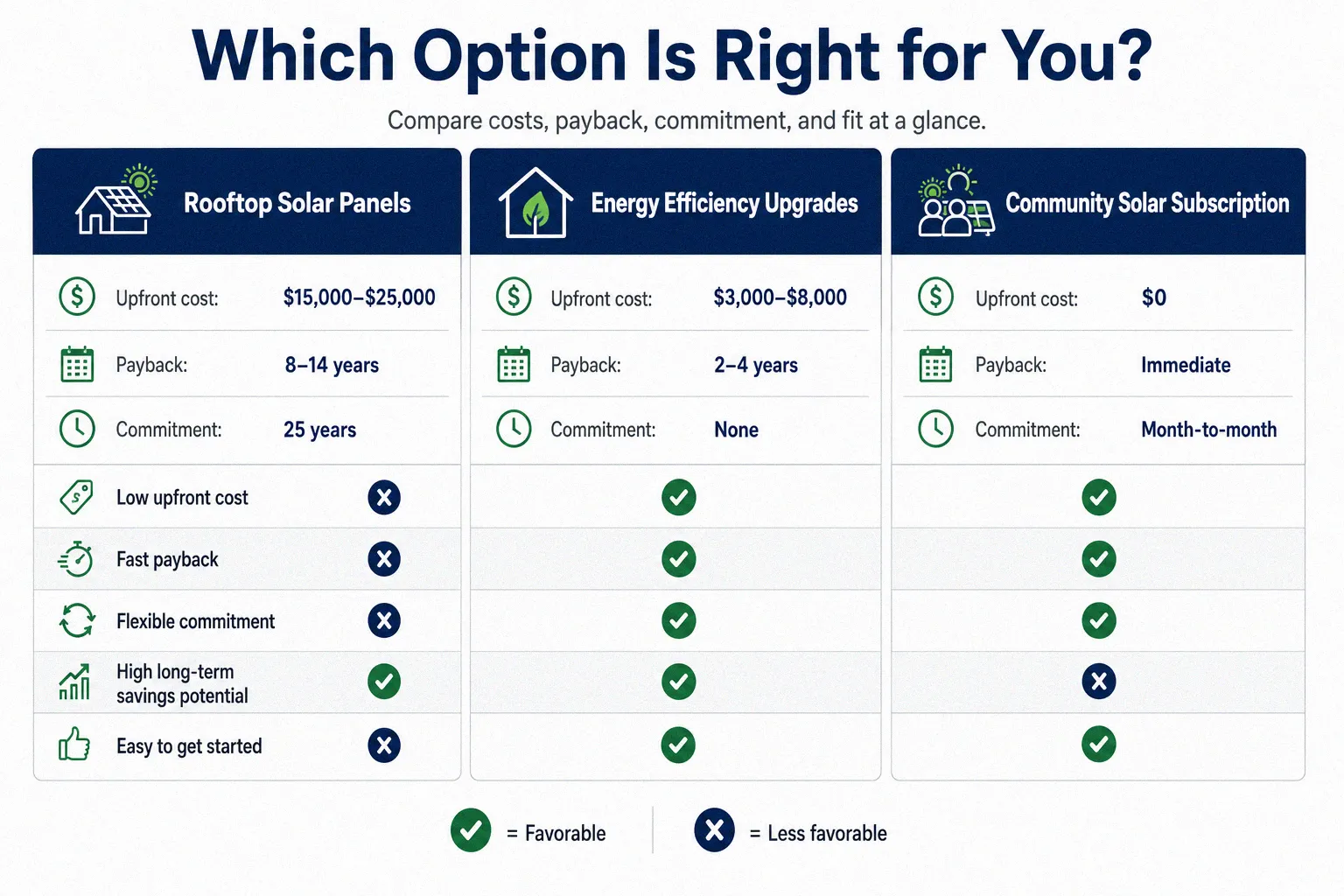
Community solar programs allow you to subscribe to a share of a local solar farm without installing anything on your property. You receive monthly bill credits without equipment maintenance, roof modifications, or upfront hardware costs.
Green energy plans offered by many utilities let you purchase 100% renewable electricity through your existing grid connection. Monthly premiums typically range from $5 to $30 with zero infrastructure changes.
These programs operate in over 40 states. For renters or homeowners with unsuitable roofs, they deliver the benefits of solar without the financial risk or hardware commitment.
If your goal is lower electricity costs rather than generating your own power, a home energy audit will almost certainly reveal cheaper and more predictable returns.
When Solar Panels Actually Make Financial Sense
Solar panels are still a strong financial investment — under the right conditions. The problem is that too many homeowners install them in situations where the numbers just don’t add up.
Solar panels are generally worth the investment when:
- Your monthly electricity bill exceeds $150
- Your state offers incentives beyond the federal ITC
- Net metering credits remain at or near retail rates
- Your south-facing roof has 350+ square feet of unshaded space
- You plan to stay in your home for 15+ years
Homeowners who purchase systems outright with cash, reside in high-rate states, and plan to stay for 15 years or longer consistently see strong financial returns. The 30% federal tax credit remains available through 2032, creating a favorable window for qualified buyers.
What electricity rate do you need for solar to be worth it?
Most financial analyses show solar panels become a worthwhile investment when your rate exceeds $0.15 per kWh. Below $0.12 per kWh, the savings timeline typically stretches past 15 years.
It all comes down to one question. Do your specific circumstances actually support a positive return on solar panels?
Running your own payback calculation before signing any contract is the single smartest move you can make. Knowing exactly how many panels your home needs keeps you from oversizing the system and overpaying.
Get at least three independent quotes and verify the net metering policy in your utility territory. Solar panels can be an excellent investment, but only when the conditions genuinely support it.
Frequently Asked Questions
Do solar panels save money in every state?
No. States with residential electricity rates below $0.12 per kWh and weak or eliminated net metering programs produce payback periods that exceed 15 years.
Louisiana, Idaho, Mississippi, and Arkansas consistently rank among the weakest markets for residential solar ROI. Savings depend entirely on your local rate structure, available state incentives, and utility export credit policies.
How long do solar panels actually last?
Most manufacturers issue 25-year performance warranties guaranteeing 80% to 85% of original rated output. The physical hardware typically lasts 30 to 40 years but generates progressively less energy each year.
Annual degradation of 0.5% to 0.7% means a panel producing 400 watts in year one delivers roughly 330 watts by year 25.
Can solar panels damage my roof?
Improperly installed mounting systems can compromise your roof membrane and cause leaks at penetration points. Qualified installers use engineered flashing and sealant systems to prevent water intrusion.
The risk increases significantly with older roofs, certain materials like clay tile or slate, and installations that require structural reinforcement.
Are solar leases a good idea?
Leases eliminate the upfront financial barrier but also strip away the most valuable ownership benefits. You forfeit the 30% federal tax credit and commit to a 20- to 25-year agreement with built-in annual cost escalators of 1% to 3%.
Selling your home before the lease term expires can create serious complications with buyers who refuse to assume the contract.
What happens to solar panels after 25 years?
Panels continue producing electricity at reduced output levels well beyond the warranty period. At that point, homeowners face three options.
You can leave the aging panels in place, invest in a full system replacement with newer technology, or pay $1,000 to $3,000 for professional removal and disposal of the old array.