 SolarPowerNerd


Solar energy has a longer and stranger history than most people realize. From ancient sun gods to space satellites, these ten facts cover what actually matters about solar power today.
1. Myths & Legends About the Sun
Someone who represents the Sun by its perceived power and strength was called a solar deity. Solar deities can be found throughout recorded history in various forms.
Ancient Egyptians believed that Amun was the creator of the sun. Ra is considered the sun god.
Amun is “the hidden one” while Ra means “sun”.
The Egyptians worshiped the sun because of its benefits and giving life to crops and all life. The Sun of Ra represented life, warmth, and growth.
For the Egyptians, Ra was a god and a creator of the universe. Also, he had a strong influence on them.
He was one of the most worshiped people in Egypt considered as King of the Gods.
Ancient Greeks believed that the sun travels in a flying chariot driven by Apollo. He was important in Greek culture.
This is for representing the sun and illuminating the world with music and warmth from the sun.
People believed that the sun is a donor of life. It’s the light to the universe and entire cosmos, watching them always with his eye.
People believed that it’s the source of wisdom.
These qualities (power, sovereignty, and wisdom) are most important in a religious group. Within them is created the solar ideology.
The Sun is known as a main-sequence star. That is a sphere composed of two main gases, hydrogen, and helium.
Find out for more important facts about the Sun in the next paragraph.
2. Statistics About the Sun
The most important energy resource on planet Earth is the Sun. We depend on its solar energy.
Life without it wouldn’t be possible.
At the same time, it’s the most environmentally friendly form of energy and it’s used for a ton of different purposes today.
According to statistics, the Sun is about five billion years old. It’s a natural nuclear reactor located at a safe distance (143 million kilometers) from Earth.
Solar energy is the largest energy source that the Earth receives. The intensity of the Earth’s surface is very low.
This is due to the large distance between the Earth and the Sun.
Even in clear skies in daylight, when the sun is directly set, the energy reaching the Earth’s surface is reduced by about 30% because of its atmospheric layers. When the sun is close to the horizon and the sky is cloudy, the energy from the sun that reaches the surface of the Earth can be negligible.
Also, the intensity varies from one point to another on the Earth’s surface.
Solar radiation arrives on the Earth’s surface with a maximum strength of 1 kilowatt per square meter. The real usable part is different.
It depends on the geographical area location, cloud cover, duration of daylight, etc.
The available solar strength varies per year, around 250 and 2500 kWh square. Solar radiation is the largest at the equator, especially in sunny, desert areas.
The energy emitted over one hour when the sun’s rays heat the globe is greater than the need for the entire human population for one year. These are just some facts that can bring some awareness in the direction of installing a rooftop solar system in our home.
3. Ten Basic Facts About Solar Energy
People in the past century were focused on using fossil fuels for their homes or companies. Solar panels were invented at that time.
But no one thought that fossil fuels might be gone someday. Now is the time for Solar Energy!
The question is, how can we produce electricity from the sun? To produce electricity, solar power uses the natural energy.
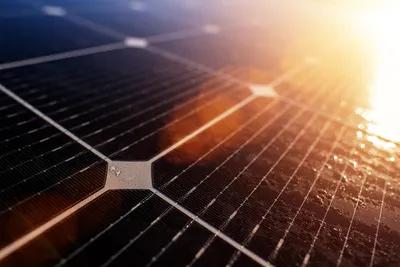
To be more precise, solar cells capture the wavelengths of solar radiation, which is converted to electricity for our homes. Photovoltaic cells in solar panels cause a reaction between photons and electrons.
When photons collide with electrons, the electrons are freed. In this way, the electrons convert this energy into electricity.
Solar power is measured in watts. A thousand watts equal one kilowatt.
One thousand kilowatts equal one megawatt. A thousand megawatts equal one gigawatt.
One thousand gigawatts equal one terawatt. In general, solar panels have 200 to 250-watt capacities.
Most of the solar panels can produce 8 to 10 kilowatts of energy per square foot.
On a year level, each home consumes on average 11.000 watts. One home can be powered with 30-250 watt panels, with an average of four hours of sunlight.
You can use solar panels for heating water and to run electrical devices in the house. It’s safe, cheap and eco-friendly.
Solar panels don’t need to use sunlight all the time. In some parts on the Earth, there are not that so many sunny days.
Net metering is used as a backup for the solar panels.
It’s a system that measures the difference between the energy that you give back to the grid and the energy that you use from the grid. That is easier and a cheap method instead of using a battery.
If you want to go off-grid entirely, a solar storage battery can store excess power for nighttime use.
If people want to run the entire Earth on renewable energy, it’s necessary to install solar panels on over 190.000 square miles. People believe that there are over 57 million square kilometers of free space.
So this would be very easy.
4. How Can Solar Energy Be Used?
To reduce the harmful gases in the atmosphere, the greenhouse effect, and global warming, fossil fuels can be replaced with solar energy. A big plus is that it’s a renewable energy.
Solar energy can be used indirectly. This is done by using heat to generate electricity using photovoltaic panels.
Heat energy can be used for hot water supply, space cooling, and heating, or indirect electricity production.
Solar energy is used through various technological configurations such as:
-
Water heaters run by solar power for heating, heating in homes using hot water
-
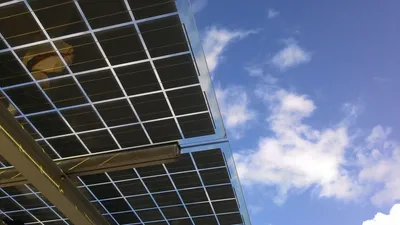
Solar photovoltaic panels, which indirectly convert solar energy into electricity
-
Passive solar energy systems to increase the efficiency of energy operation in buildings
-
Some other solar power system applications include solar lighting (indoor and outdoor), providing power to electrical appliances of all sizes, and preparing food.
Advantages of Solar Energy
- A renewable energy source that is environmentally friendly and sustainable
- It’s abundant and free
- Solar energy is available in large quantities
- Widespread use
Disadvantages of Solar Energy
- Solar energy is directly dependent on weather. Without storage equipment (especially in cloudy and colder days), it’s considered to be an extremely unstable and unreliable source of energy.
- The cost of solar panels is higher than conventional energy sources.
- Solar incentives should be applied, consequently.
- Solar photovoltaic panels, which is a mature and reliable technology, are expected to be economically viable in the future, due to their price drop.
- Climate factors are very unpredictable and have a direct impact on all types of renewable energy
5. Health Facts
Another well-known fact is that solar power is the most sustainable and renewable source on Earth. If we continue wasting energy and releasing CO2 into the atmosphere, in the next 50 years beaches in Norway would become the next Saint Tropez.
The fact that fossil fuels will become more inaccessible to the market, we can conclude that their price will increase by the day. The company Shell predicts that if consumption is not reduced, oil and gas will disappear in less than 50 years.
Coal plants are one of the biggest contaminators and contributors to global warming. Every year, millions of people are dying.
Pollution is one of the main causes. Burning fossil fuels leaves deposits of toxic gases in the atmosphere.
With solar power, pollution can be reduced. It can also protect the environment.
All of these factors lead to global warming.
This happens when the temperature of the earth’s atmosphere increases because of the amount of radiation the Earth receives. This energy is captured in the atmosphere and can’t be radiated back into space.
Solar power doesn’t produce pollution. Pollution is considered a global killer.
Pollution can lead to major health issues like cancer and respiratory disease. All these have an effect on children, adults, even on animals and plants.
Using solar panels can significantly reduce sulfur dioxide and nitrous oxides. All of which can cause respiratory problems such as asthma, bronchitis, pulmonary inflammation and chronic respiratory disease.
They are also known to cause heart issues like a heart attack or stroke.
Solar panels don’t create any noise pollution. They absorb the energy from the sun’s rays quietly.
Installing a rooftop panel system can reduce pollution. It can improve the quality of the air for humans, but also for animals and nature.
6. Cost & Affordability of the Solar Panels
Solar cell improvements based on Becquerel’s initial uncovering of the photovoltaic effect brought early solar panels to about 1 percent efficiency and around $300 per watt.
Silicon solar cells in Bell Laboratories in 1954 worked with 4% efficiency. But later on, they achieved 11% efficiency, which was a significant increase by powering an electric device for the first time in history.
The use of solar panels increased production. It also reduced the price to $100 per watt.
This helped the space program in the 1960s.
The research for less expensive solar cells, made by Dr. Elliot Berman in 1970, brought down the price to $20 per watt. From 2016, the average cost of solar energy is $0.12 per kilowatt, which is cheaper than other sources.
Solar installation in the US often tiers from $2.87 to $3.85 in line with watt. The entire installation package fee averages around $16,800. However, if you observe tax credits, the total installation will likely go down to between $10K and $13,475.
People who have installed photovoltaic panels in their homes said that the maintenance is minimal and the returns are high. If you’re weighing the numbers, our guide on when solar panels are worth it breaks down the payback timeline in detail.
It takes six to fifteen years for the owner to pay for the solar panels. For people who are living in places with more sunny days during the year, they can do it in less than two years.
According to statistics from 2013, the average monthly bill for electricity in America is about $110. Americans spend around $1.300 for electricity per household.
That depends on how many solar panels they have and how much energy they are producing and consuming.
7. Growth & Availability of Solar Power
Solar electricity, for now, will remain to be a completely reliable source of energy. Our capacity to reap solar electricity depends on technology, location, cost, and legislation.
Solar energy is recognized as the future of renewable sources. It prevents pollution and can help save the environment.
The Sun is the resource for the solar panels.
The toxic gas that comes from toxic fuels can obscure the atmosphere. It also stops the sunlight from reaching Earth.
How can we come to a solution for this matter?
Theoretically, if more people switch to solar energy, it will reduce pollution and gas emissions. In this way, the Earth can harness more solar energy.
Fossil fuels can be replaced with the usage of solar energy.
It can be used in big companies or your home by installing solar panels. They absorb energy which can be used for cooking, heating water or washing your clothes.
Agriculture and horticulture can benefit a lot from solar energy. This will take certain techniques, such as time cycles for planting and growing the plants.
Solar energy can be used for creating power for where it’s needed temporarily, such as the Olympics, Christmas fairs, World Cup.
Top solar countries in the world are China, India, South Africa, and Chile. In 2017, China was the leader in solar energy.
With 130 646 megawatts installed capacity, 3 times more than Japan and the United States.
The country that generates the most solar power in the United States is California, according to data from 2016. After California are North Carolina, Arizona, Nevada, New Jersey, and Utah.
The city that operates on 100 percent renewable resources is Las Vegas. On one square meter, the planet is receiving 1.366 watts of solar radiation.
8. Solar System & Their Benefits
Solar systems, as well as solar collectors, are becoming increasingly important to our lives. Renewable energy can be used in many ways.
Some important facts when it comes to this type of technology are:
Solar power is a cheap and efficient way of converting sunlight into hot water. Solar panels have been in use since the 1920s.
The main role of the collectors is that they transform the sun’s rays into heat and transfer that heat to water, or solar fluid. Solar collectors are divided into two basic categories, concentrating and non-concentrating collectors.
They are also known as solar thermal collectors, which are the systems used to collect and absorb solar energy and convert it into a more useful form. The solar panels, on the other hand, convert solar energy into electricity.
They can convert sunlight energy into hot water. They are called passive and active collectors.
Solar collectors can use the heat either as heat for hot water systems or convert it into electricity in solar cells. Active solar collectors are using pumps.
In this way, they can move fluidly through the system.
Passive solar collectors use convection to pump fluid through the system without the need for a pump. This is called the thermosiphon effect.
This requires the collector panel to be tilted and the repository mounted above them.
Solar water heating systems contain a storage container and solar collectors. Even on cold days, there is enough sunlight to allow solar collectors to provide significant performance even under such conditions.
A great solution to global warming, whether used on its own or as part of a broader sustainable energy plan. Solar collectors are becoming more and more popular every day.
People are becoming interested in developing sustainable energy solutions at the micro-level. As energy prices rise, future solar collectors will become more and more used.
9. Historical Facts About Solar Panels
Individuals have used alternative energy as far back as the seventh century B.C. The earliest uses of solar energy involved focusing the sun’s energy through a magnifying glass to start fires for change of state.
By the third century B.C., Greeks and Romans bounced daylight off on “burning mirrors” to light sacred torches for spiritual ceremonies. Physicist Edmond Becquerel in 1839 discovered the photovoltaic effect while he was experimenting with a cell made out of metal electrodes.
He noted that the cell produced electricity when exposed to light.
Willoughby Smith found out that selenium could function as a photoconductor. 50 years later, Charles Fritz created the first selenium solar cell.
In 1905, Einstein posted a paper on the photoelectric impact and how it carries electricity. This generated more attention regarding the possibilities of solar energy.
The massive leap in the direction of the solar cells just like the ones used in panels today originated from the work of Bell Labs in 1954. Daryl Chapin, Calvin Fuller, and Gerald Pearson created a solar cell with the use of silicon.
Solar panels were used in the 1950s and 1960s on various spacecraft. The first one was Vanguard One in 1958.
In 1964, the Nimbus satellite could run on a 470-watt photovoltaic solar panel.
In the 1970s, an oil shortage added awareness of the energy resources. It was a time of excessive inflation when Americans were squeezed economically.
These shortages in essentials made the need for solar innovations more apparent.
Over the years, more people were interested in solar energy. It has been built to be more efficient, cost less and safe for the environment.
10. Climate Change
One of the biggest problems we face today is global warming. This is caused by human activities.
Many solutions can help to protect the Earth from pollution and natural disasters. One of them is solar panels.
Solar panels are often touted as a major part of the solution for climate change. This is not only available today, but the costs are increasingly competitive.
They are forecasted to decrease well into the future.
This is a big opportunity for energy companies. During this time when the economy, climate, and public health are all searching for solutions to systemic problems within each of them.
The Earth receives immense energy from the Sun, which is exactly why it’s such a strong candidate for future sustainable energy production. With technology, solar panels are the right substitute for fossil fuels.
They are eco-friendly, and they do not produce any emissions that can harm the environment.
The usage of renewable energy is getting more and more popular worldwide. On the other hand, fossil fuels, such as oil and natural gas, are increasing in cost daily.
They are also becoming less accessible and their resources are limited.
On the other hand, there are many other consequences of using fossil fuels around us. This, in turn, compels us to change our habits and move towards greener sources of energy.
Because of these negative factors in energy production, it’s necessary to promote new technologies in renewable energy. This, hopefully, will replace the usage of fossil fuels.
Installing a solar system is an intelligent investment. Its demand is going up.
Frequently Asked Questions
What is the average lifespan of a solar panel?
Solar panels routinely operate for 25 to 30 years, with some early residential installations from the 1980s still generating useful power. Panel technology has been in use since the 1950s space program, and durability has only improved since then.
Annual output drops about 0.5%, so a system loses roughly 12 to 15 percent of its original capacity over a quarter century.
How much power do solar panels produce on cloudy days?
Solar panels typically produce 10 to 25 percent of their peak capacity on cloudy days. Photons pass through clouds in lower concentrations, but panels still convert them into electricity.
Germany, which averages fewer sunny days per year than most U.S. states, still ranks among the world’s top solar producers. A solar phone charger or portable battery pack helps keep small devices running during overcast stretches.
Are solar panels worth it for the average homeowner?
For most homeowners, solar panels pay for themselves within six to fifteen years, depending on location, energy usage, and available incentives. After that breakeven point, the electricity your system generates is essentially free.
Federal and state tax credits can significantly reduce the upfront cost, making the investment more accessible. Homes with solar installations also tend to sell for higher prices than comparable properties without them.
Do solar panels require a lot of maintenance?
Solar panels are one of the lowest-maintenance energy systems available. In most cases, occasional rain is enough to keep them clean, though a manual rinse once or twice a year helps in dusty areas.
There are no moving parts to wear out, which keeps repair costs minimal. If you pair your panels with a camping lantern or other portable solar gear, that equipment is similarly low-maintenance and easy to care for.
Final Thoughts
Solar energy has come a long way since ancient civilizations worshiped the sun as a god. Today, it’s one of the most practical and accessible forms of renewable energy on the planet.
The technology keeps improving, costs keep dropping, and more homeowners and businesses are making the switch every year.
If you’re interested in cutting your electricity bill, reducing your carbon footprint, or just learning something new, these facts show that solar power is more than a trend. It’s a proven solution backed by decades of research and real-world results.
We hope you’ve enjoyed this list of 10 fun facts about solar energy that may surprise you.