 SolarPowerNerd

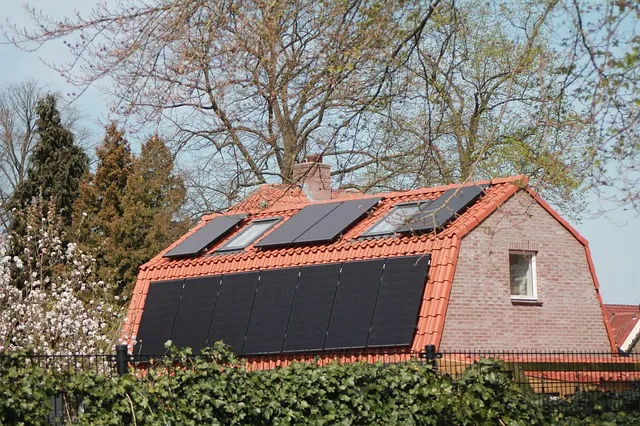
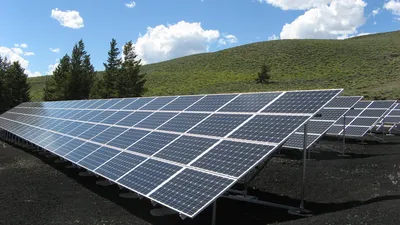
A “1000 watt solar panel” is almost never a single panel. At this wattage, you are buying a kit of multiple panels, typically four 250W or five 200W units wired together.
That distinction matters because it affects how much roof or ground space you need and how the system gets wired.
Kits vary widely in what is actually in the box. Some include a charge controller, mounting hardware, and cabling.
Others ship panels only and expect you to source the rest separately. A missing MPPT charge controller or undersized wiring can cost as much as the panels themselves, so checking the component list is more important than comparing headline wattage.
Real-world output also differs by cell type and panel efficiency. Monocrystalline cells in this range typically hit 20 to 22 percent efficiency, while polycrystalline options run closer to 17 percent and need more surface area to reach the same output.
Below are 10 kits broken down by what is included, build quality, and actual performance.
Quick Comparison Chart
| # | Product | Our Rating | ||
|---|---|---|---|---|
| 1 | 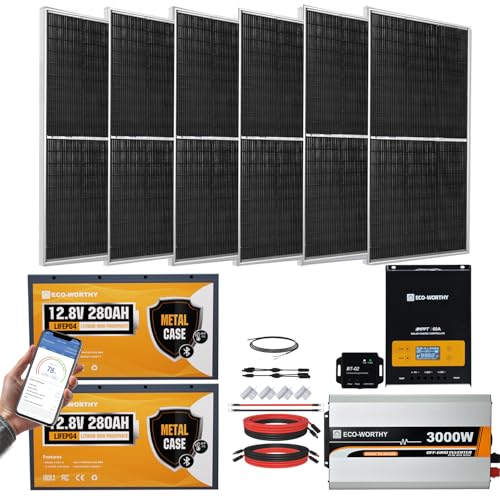 |
ECO-WORTHY 1200W 24V Off-Grid Solar System | ★★★★★ | Check Price |
| 2 | 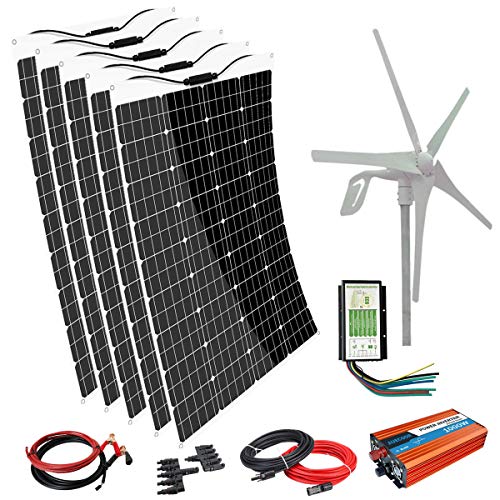 |
AUECOOR 1000W Wind and Solar Hybrid Kit | ★★★★★ | Check Price |
| 3 | 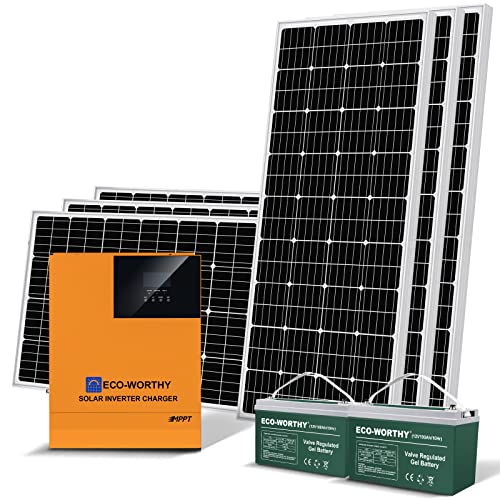 |
ECO-WORTHY 1200W Complete Solar Panel Kit with Battery | ★★★★☆ | Check Price |
| 4 |  |
ExpertPower 1200W 12V Solar Panel Kit | ★★★★☆ | Check Price |
| 5 |  |
Giosolar 1440W Off-Grid Solar System Kit | ★★★★☆ | Check Price |
| 6 |  |
XINPUGUANG 1000W Flexible Solar System Kit | ★★★★☆ | Check Price |
| 7 |  |
Giosolar 1000W Monocrystalline Solar Panel Home Kit | ★★★★☆ | Check Price |
| 8 |  |
ECO-WORTHY 1200W Solar Tracker System | ★★★★☆ | Check Price |
| 9 |  |
My SolarMill 1000W Wind and Solar Hybrid System | ★★★★☆ | Check Price |
| 10 |  |
Giosolar 1000W Flexible Monocrystalline Solar Panel Kit | ★★★★☆ | Check Price |
The Real Difference Between These Kits
We compared complete systems like the ECO-WORTHY 1200W against panel-only kits and wind-solar hybrids, scoring each on included components, daily output, and controller quality. Two kits can both say “1000 watts” on the box and arrive with completely different contents.
If a kit ships without batteries or an inverter, factor those costs in before you buy. The turnkey systems ranked higher here because they save you from sourcing and matching parts on your own.
1. ECO-WORTHY 1200W 24V Off-Grid Solar System
ECO-WORTHY 1200W 24V Off-Grid Solar System
A comprehensive 1200W off-grid system with six 195W monocrystalline panels, dual lithium batteries, a 60A MPPT controller, and a 3000W pure sine wave inverter.
Pros
- Up to 5.52 kWh daily in full sun
- Six 195W panels with 23% efficiency
- Dual 280Ah lithium batteries with BMS
- 60A MPPT controller with Bluetooth monitoring
- 25-year after-sales support included
Cons
- 24V system may need 12V adapters
- Heavy kit needs multiple installers
The ECO-WORTHY 1200W kit ships as a true turnkey system. Inside the box you get six 195W monocrystalline panels, a six-string combiner box, a 60A MPPT charge controller, six sets of Z-mounting brackets, dual 280Ah lithium batteries with cables, and a 3000W pure sine wave inverter.
That component list matters because most competing kits at this price point leave out the batteries, the inverter, or both. Here you can go from unpacking to generating power without sourcing any additional parts.
Daily output reaches up to 5.52 kWh under full sun, which is enough to run a standard refrigerator, LED lighting, and several USB devices simultaneously. The combiner box includes per-string fuses, anti-backflow diodes, and lightning protection.
The system runs on 24V, so 12V appliances need a step-down converter or adapter.
2. AUECOOR 1000W Wind and Solar Hybrid Kit
AUECOOR 1000W Wind and Solar Hybrid Kit
A versatile wind and solar hybrid kit combining five 120W flexible solar panels with a 400W wind turbine and a 1000W pure sine wave inverter for continuous off-grid power.
Pros
- Solar and wind combo for day-and-night power
- Five flexible 120W panels fit curved surfaces
- 400W turbine starts at low wind speeds
- Corrosion-resistant pure sine wave inverter
- Monocrystalline cells output 1.3x more than poly
Cons
- Wind turbine adds installation complexity
- Output depends on local wind conditions
The AUECOOR kit splits its 1000W total between 600W of solar (five 120W flexible monocrystalline panels) and a 400W five-blade wind turbine. That split means the system generates power after sundown as long as wind is blowing, which is useful in coastal or elevated locations where overnight breezes are common.
The flexible panels bend to fit curved surfaces on boats, RV roofs, and camper shells. Monocrystalline cells deliver roughly 1.3 times the output of polysilicon at the same wattage, so the panels hold up better in partial shade and overcast conditions than poly equivalents.
The included 1000W pure sine wave inverter sits in a corrosion-resistant aluminum shell, and MC4-compatible solar cables with branch connectors simplify wiring. The wind turbine starts generating at low wind speeds, though real-world output drops significantly in calm or inland locations where sustained wind is rare.
3. ECO-WORTHY 1200W Complete Solar Panel Kit with Battery
ECO-WORTHY 1200W Complete Solar Panel Kit with Battery
A complete home solar solution featuring high-output panels paired with a 2.4 kWh battery pack and an MPPT hybrid charger inverter, designed for houses, sheds, and farms.
Pros
- 2.4 kWh battery stores energy after sundown
- MPPT hybrid charger maximizes energy harvest
- Ideal for homes, sheds, and farm backup
- Combiner box with fuses and overcharge protection
Cons
- Battery may not cover heavy overnight loads
- Requires basic electrical knowledge for wiring
This ECO-WORTHY variant targets fixed installations at homes, sheds, and farms. The box includes six 195W panels, a 2.4 kWh battery pack, an MPPT hybrid charger inverter, a six-string combiner box, a 60A charge controller, battery cables, solar cables, and Z-mounting brackets.
Daily output tops out around 4 kWh under full sun, which is lower than the #1 kit because the battery pack is smaller. The 2.4 kWh battery stores enough to run LED lighting and small appliances overnight but will not carry heavy loads like a water heater or space heater through the night.
The combiner box includes per-string fuses and anti-backflow diodes for overcharge, discharge, and short circuit protection. For a shed, workshop, or small off-grid cabin where you need lights, a fan, a phone charger, and maybe a small fridge, this kit covers those loads without requiring you to piece together components from different brands.
4. ExpertPower 1200W 12V Solar Panel Kit
ExpertPower 1200W 12V Solar Panel Kit
A heavy-duty 1200W kit with twelve 100W monocrystalline panels and a 100A MPPT charge controller, built for serious off-grid and RV installations.
Pros
- Twelve 100W panels with 21% efficiency
- 100A MPPT auto-detects 12V-48V systems
- Smart temp regulation protects batteries
- Bluetooth and display for charge monitoring
- Includes MC4 cables, brackets, and connectors
Cons
- Twelve panels need significant mounting space
- No batteries or inverter included
The ExpertPower kit ships panels and a controller only, with no batteries or inverter included. That makes it a good fit if you already own a battery bank and inverter and just need the solar array and charge management.
This kit includes twelve 100W monocrystalline solar panels, a 100A MPPT solar charge controller, 20ft 10AWG MC4 solar cables, 6ft 8AWG battery cables, twelve sets of solar panel mounting brackets, and a set of branch connectors. The high-performance monocrystalline cells offer up to 21% efficiency and are virtually maintenance-free.
The 100A MPPT controller automatically recognizes 12V, 24V, 36V, and 48V systems for quick setup, and it uses sophisticated tracking to maximize power generation by over 20% compared to PWM systems. With a 250V max PV input voltage, you have plenty of flexibility on how to wire the array.
The controller also features smart temperature regulation, protecting batteries in any climate, along with built-in Bluetooth and a digital display for easy monitoring. If you want a powerful panel kit and plan to choose your own battery and inverter, the ExpertPower system gives you that flexibility.
5. Giosolar 1440W Off-Grid Solar System Kit
Giosolar 1440W Off-Grid Solar System Kit
A robust 1440W off-grid system with twelve 120W glass monocrystalline panels, a 3000W pure sine wave inverter, dual 100Ah batteries, and a 60A MPPT controller.
Pros
- Up to 6 kWh daily in full sun
- Upgraded 5 grid-line panels boost efficiency
- 3000W inverter with overload protection
- Combiner box with 15A fuses simplifies wiring
- MPPT controller auto-detects 12V and 24V
Cons
- Twelve panels need a large mounting area
- Heavy system needs careful roof planning
The Giosolar 1440W Complete Off-Grid Solar System targets anyone who needs serious off-grid power for RVs, trailers, sheds, and cabins.
With twelve 120W glass monocrystalline solar panels upgraded with 5 grid lines for higher efficiency, a 3000W 24V pure sine wave inverter, a 60A MPPT charge controller, dual 100Ah batteries, a four-string combiner box, solar cables, and Z-brackets, this is a true all-in-one package.
The system can deliver daily electric output up to 6 kWh under ideal sunlight conditions. The panels feature anti-reflective, high-transparency tempered glass with enhanced stiffness and impact resistance, built to handle high winds and snow loads.
The 3000W inverter covers all the main fault types: overload, overcurrent, high temperature, short circuit, and battery reverse connection. For a complete off-grid system with everything included, this kit delivers strong performance.
6. XINPUGUANG 1000W Flexible Solar System Kit
XINPUGUANG 1000W Flexible Solar System Kit
A flexible 1000W off-grid kit with ten bendable 100W monocrystalline panels, a 45A charge controller, and a 2000W pure sine wave inverter for curved surfaces.
Pros
- Bendable panels fit RVs, boats, and campers
- Multi-layer lamination boosts performance and lifespan
- Withstands high winds, snow, and extreme temps
- Works off-grid or grid-tied via series wiring
Cons
- Less durable than glass-framed panels
- 45A controller may limit future expansion
The XINPUGUANG kit uses ten 100W bendable panels that conform to curved surfaces on RVs, boats, sailboats, trucks, and cabin roofs. Unlike rigid glass-framed panels that require Z-brackets and flat mounting surfaces, these bond directly to curved rooflines with adhesive or zip ties.
The kit includes a 45A charge controller, a 2000W pure sine wave inverter, two 5-in-1 PV connectors, two 3m PV connector cables, and a 3m alligator clip cable. You can wire the panels in series for 24V or 48V battery charging, which adds flexibility that most dedicated off-grid kits do not offer.
Conversion efficiency sits around 19.5%, which is slightly below the 21 to 23 percent range of rigid monocrystalline panels. Multi-layered lamination on each panel improves weather resistance, though flexible panels generally have a shorter lifespan than glass-framed alternatives because heat builds up against the mounting surface instead of dissipating through an air gap.
The 45A controller may also limit expansion if you plan to add more panels later.
7. Giosolar 1000W Monocrystalline Solar Panel Home Kit
Giosolar 1000W Monocrystalline Solar Panel Home Kit
A well-rounded 1000W home kit with ten 100W premium monocrystalline panels and a 40A MPPT LED charge controller, backed by a 25-year power output warranty.
Pros
- Premium monocrystalline cells with 21% efficiency
- 40A MPPT controller with 12V/24V auto-sensing
- Multi-layer lamination with pre-drilled holes
- Withstands strong winds and heavy snow loads
- 25-year transferable power output warranty
Cons
- No inverter or batteries included
- Ten panels take longer to wire
The Giosolar Home Kit is a panel-and-controller package without batteries or an inverter. You get ten 100W rigid monocrystalline panels, a 40A MPPT LED charge controller, 16.4ft solar cables, and Y-branch connectors.
The controller auto-senses 12V and 24V systems and includes protection against overloading, short circuits, and overcharging.
Cell efficiency reaches up to 21%, and the panels use multi-layered lamination with pre-drilled mounting holes for straightforward installation. The rigid glass-framed construction handles strong winds and heavy snow loads, making these a better long-term choice than flexible panels for permanent ground or roof mounts.
Giosolar backs the panels with a tiered 25-year transferable warranty: 95% output at 5 years, 90% at 10 years, and 80% at 25 years. That warranty structure is competitive with the larger brands and gives some assurance against premature cell degradation.
The 40A controller is appropriately sized for 1000W of panels but will cap you if you want to expand beyond that later.
8. ECO-WORTHY 1200W Solar Tracker System
ECO-WORTHY 1200W Solar Tracker System
A dual-axis solar tracking system with six 195W N-type bifacial panels that automatically follow the sun for up to 39% more energy capture than fixed mounts.
Pros
- Dual-axis tracker rotates up to 270 degrees
- N-type bifacial panels with 25% efficiency
- Generates roughly 7.68 kWh daily output
- Pre-set controller for quick easy installation
Cons
- Moving tracker parts may need periodic maintenance
- Requires large open ground space for placement
The ECO-WORTHY 1200W Solar Tracker System takes a different approach to maximizing power output by automatically following the sun throughout the day.
This kit includes six 195W N-type bifacial monocrystalline solar panels mounted on a dual-axis tracking bracket with a sunshine sensor and two-axis driving system. The tracker can rotate up to 270 degrees, allowing the panels to constantly face the sun at the optimal angle.
The N-type panels hit 25% conversion efficiency with 18 busbars for better current transfer, and the corrosion-resistant aluminum frame holds up for decades outdoors. With the tracking system, you gain approximately 39% more sunlight energy compared to a fixed bracket setup.
The pre-set controller and pre-connected wires streamline installation, and the system only needs about 111 by 106 inches of ground space. This kit features a 25-year transferable output power warranty with tiered efficiency guarantees.
9. My SolarMill 1000W Wind and Solar Hybrid System
My SolarMill 1000W Wind and Solar Hybrid System
A unique hybrid renewable system that integrates three vertical axis wind turbines with solar panels in a single compact unit for near 24-hour power generation.
Pros
- Wind and solar hybrid for 24-hour generation
- Scalable design pairs units to 2 kW+
- Includes inverter with silent eco-friendly operation
- Works in on-grid and off-grid setups
- 25-year design life with 5-year warranty
Cons
- Vertical turbines produce less in high wind
- Unique form may not suit standard rooftops
The SolarMill packs three vertical axis wind turbines and solar panels into a single compact unit. Unlike the AUECOOR hybrid (#2), which separates the turbine and panels, SolarMill integrates everything into one housing.
That means less mounting complexity but also less flexibility in panel placement.
The system works in both on-grid and off-grid configurations and scales up easily. You can daisy-chain multiple SolarMill units to build a 2000W or larger system.
The included inverter runs silently, which matters for residential rooftops where noise complaints from spinning turbines are a real concern.
Vertical axis turbines capture wind from any direction without needing to pivot, but they produce less power per swept area than horizontal axis designs. In locations with consistent moderate wind (8 to 15 mph), the turbines supplement solar output meaningfully.
In calm inland areas, the wind contribution will be minimal and the solar panels carry most of the load. The 25-year design life and 5-year manufacturer warranty cover the hybrid hardware.
10. Giosolar 1000W Flexible Monocrystalline Solar Panel Kit
Giosolar 1000W Flexible Monocrystalline Solar Panel Kit
A highly flexible 1000W kit with ten ETFE bump-surface monocrystalline panels that bend up to 30 degrees, paired with a 60A MPPT charge controller for off-grid use.
Pros
- ETFE honeycomb boosts light capture by 10%
- Panels flex up to 30 degrees for curves
- 60A MPPT controller with 12V/24V auto-sensing
- Six eyelets per panel for easy mounting
- 25-year transferable power warranty included
Cons
- Thinner ETFE panels more vulnerable to impact
- No inverter or batteries included
The Giosolar Flexible kit uses ETFE (ethylene tetrafluoroethylene) coated panels with a honeycomb bump surface that captures light at wider angles than flat lamination. Giosolar claims this structure boosts light absorption by about 10% with 95% UV transparency, and the cells hit up to 23.5% efficiency, which is higher than most flexible panels on this list.
Each of the ten 100W panels flexes to a 30-degree curve, fitting coach roofs, RV rooflines, and boat decks. Six stainless steel eyelets per panel allow mounting with adhesives, zip ties, or velcro, so no drilling is required.
The downside of ETFE panels compared to glass-framed rigid panels is impact vulnerability. A branch strike or hail that a tempered glass panel would shrug off can crack an ETFE surface.
The kit includes a 60A 12V/24V MPPT charge controller with auto-sensing, solar wires with MC4 connectors, and Y-branch cable connectors. The 60A controller is large enough for the full 1000W array and leaves room for modest expansion.
No batteries or inverter are included, so budget for those separately.
What is MPPT Charge?
MPPT charge stands for Maximum Power Point Tracking, an algorithm in the charge controller that estimates the voltage at which a PV module can produce maximum power.
You can compare MPPT charge to PWM (Pulse Width Modulation), which charges a battery with constant 3 stage charging.
On the other hand, the MPPT provides multistage charging that also has a much higher conversion efficiency, up to 30% higher compared to PWM.
Why is MPPT Charge Controller Better Than PWM?
MPPT charge controllers are attractive because they enhance the energy yield of the PV generator and use standard PV modules created for grid-connected applications that ordinarily cannot be applied off-grid because of their high MPP voltage.
What Type of Batteries do Solar Power Systems Use?
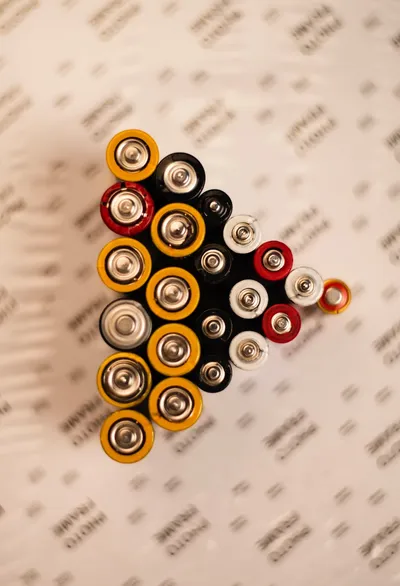
Solar power systems use lead-acid batteries built to draw as much energy as possible without shortening battery life. Solar panels charge deep cycle batteries so you can use electricity anytime, even after the sun goes down, rather than just while the system is actively producing power.
Such batteries are known as deep cycle batteries or solar batteries.
Are There Different Types of Deep Cycle Batteries?
Yes, there are different types of deep cycle batteries.
The majority of manufacturers are turning to Lithium deep cycle batteries that are safer, have a great cycle life, lower weight, greater depth of discharge, much better charge efficiency, low self-discharge rate, and can operate on low temperatures much better compared to other types.
Final Thoughts
The biggest lesson from testing these kits is that wattage alone tells you almost nothing. Two kits can both claim 1000W and arrive with wildly different contents, so always check whether batteries, an inverter, and a charge controller are included before you commit.
For most off-grid setups, the ECO-WORTHY 1200W system earned the top spot because it ships ready to install with everything from panels to lithium batteries. The hybrid kits from AUECOOR and SolarMill are worth a serious look if you deal with cloudy stretches where wind can pick up the slack after sundown.
If you already own batteries and an inverter, a panel-only kit like the ExpertPower or Giosolar Home Kit gives you strong cells and a quality MPPT controller without paying for gear you do not need. Flexible options from XINPUGUANG and Giosolar also impressed us on curved RV and boat surfaces where rigid glass panels simply will not work.
Matching the right solar storage batteries to your kit is just as important as picking the panels themselves, so factor battery capacity into your budget from day one.