 SolarPowerNerd
 roundup
 7 Best Solar Keyboards That Work in Any Real Office Lighting
We tested 7 solar keyboards on indoor charging speed, dark-mode battery life, and key feel. See which handles real office lighting - not just bright sunlight.
Solar chargers, portable panels, power stations, and solar-powered gadgets reviewed and compared.

We may earn a small commission through links on this page, at no extra cost to you. As an Amazon Associate, we earn from qualifying purchases. Ratings reflect our own editorial evaluation.
Solar-powered devices have moved well past the novelty stage. Portable panels that fold into a backpack, power stations that run a mini fridge for two days, phone chargers that weigh less than a paperback -- the technology has caught up with the promise.
Part of this shift is practical. Electricity costs keep climbing, grid outages are more common, and anyone who camps, travels, or works remotely has learned the hard way that wall outlets aren't always available. Solar fills that gap without fuel costs, noise, or emissions.
This guide covers every major category of solar device you're likely to shop for, from pocket-sized chargers to full-size portable power stations. We break down what actually works, what's marketing fluff, and how to tell a quality panel from a cheap knockoff that'll disappoint you on the first cloudy day.
You don't need to overhaul your entire power setup at once. Most people start with a single charger or a small panel and build from there as they see the savings and convenience add up. By the time you've replaced a couple of battery packs with solar alternatives, the shift feels natural.
New solar products launch constantly. Some represent genuine improvements in efficiency and portability, others are repackaged budget cells with inflated specs. The sections below help you separate the two.
Solar-powered devices are any electronics or gadgets that convert sunlight into usable electrical energy, either through built-in photovoltaic cells or by connecting to external solar panels. They range from small items like calculators and watches to large portable power stations capable of running appliances.
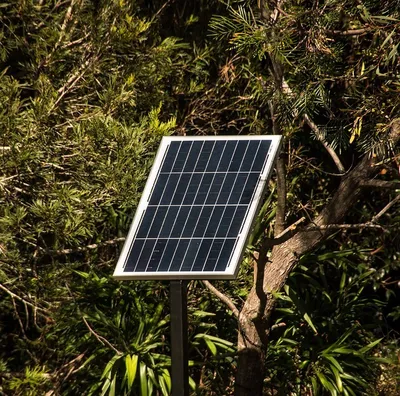
The core technology is photovoltaic (PV) cells -- semiconductor materials, typically silicon-based, that generate direct current (DC) electricity when photons from sunlight knock electrons loose in the cell material. This is the same fundamental science behind rooftop solar installations, just scaled down to portable and consumer-grade form factors.
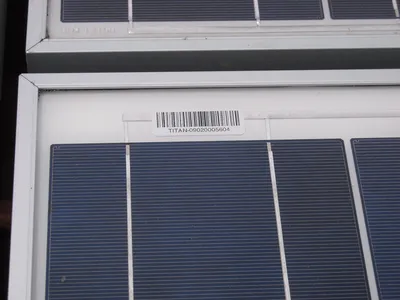
Modern consumer solar devices primarily use three cell types: monocrystalline, polycrystalline, and thin-film. Monocrystalline cells deliver the highest efficiency (typically 20-24% in consumer panels) and perform best in limited space. Polycrystalline is cheaper but less efficient (15-18%). Thin-film is lightweight and flexible but trails both in conversion rates.
The practical difference for buyers: a monocrystalline panel charges your phone noticeably faster in the same sunlight conditions than a polycrystalline panel of the same physical size. That efficiency gap matters when you're dealing with limited sun exposure or need reliable power on the move.
Most solar devices include an integrated battery or charge controller that stores energy for use when the sun isn't shining. This means you can charge during the day and use the stored power at night -- a critical feature that separates useful solar products from the ones that only work in direct sunlight.
Five main categories dominate the market: portable solar chargers, solar power stations, solar-powered gadgets, solar panels for charging, and solar battery packs. Each solves a different problem in the off-grid power equation.
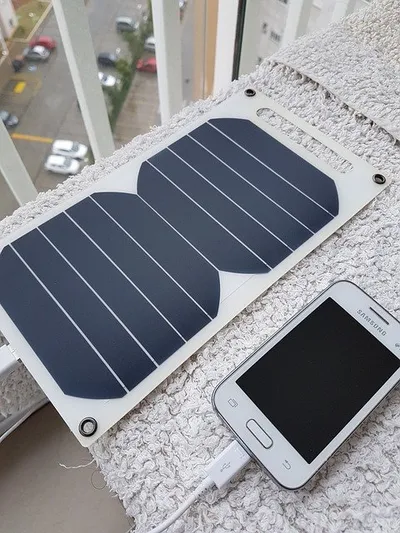
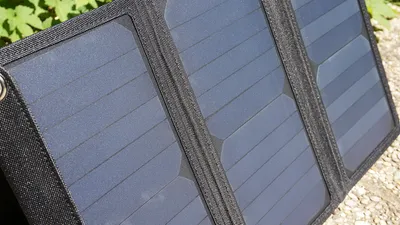
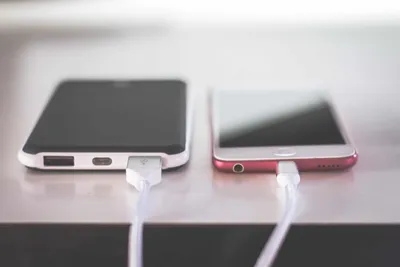
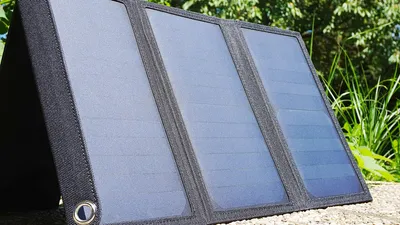
These are the entry point for most people. Compact foldable panels with USB outputs that charge phones, tablets, earbuds, and other small electronics directly from sunlight. Wattage typically ranges from 10W to 30W for personal-use models.
The better brands -- Anker, Nekteck, BigBlue -- use high-efficiency monocrystalline cells with smart IC chips that detect your device and deliver optimal charging current. Budget panels skip the smart charging circuitry, which means slower, less reliable charges and potential damage to sensitive devices.
Folding designs with two to four panels strike the best balance between portability and surface area. A three-panel 21W charger folds to about the size of a tablet and charges a smartphone in roughly the same time as a wall outlet on a clear day.
These are essentially large battery banks with built-in inverters, allowing them to power AC appliances, not just USB devices. Capacity ranges from 200Wh for small units to over 3,000Wh for whole-home backup models.
Jackery, EcoFlow, Bluetti, and Goal Zero dominate this space. The key differentiator is the combination of battery capacity (measured in watt-hours), inverter output (measured in watts), and the variety of output ports -- USB-A, USB-C, 12V car outlets, and standard AC plugs.
Power stations pair with separate solar panels for recharging. A 1,000Wh station paired with 200W of solar panels can recharge in about 5-7 hours of direct sun, giving you enough stored energy to run a laptop for a full workday, keep a CPAP machine running overnight, or power a portable fridge for 12-16 hours.
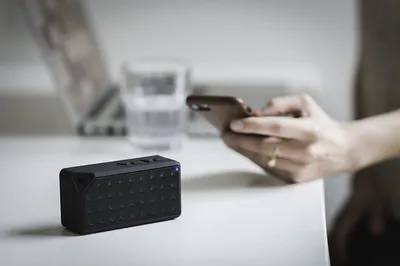
This category includes everything with built-in solar cells: solar radios, solar lanterns, solar watches, solar-powered Bluetooth speakers, and solar calculators. The solar component is integrated into the device itself, so there's nothing extra to carry or connect.
Quality varies enormously here. A well-made solar lantern from a brand like MPOWERD or LuminAID provides hours of light from a day's charge. A cheap no-name solar Bluetooth speaker might need a full day of sun just to play for 30 minutes -- check the actual battery capacity and solar input wattage before buying.
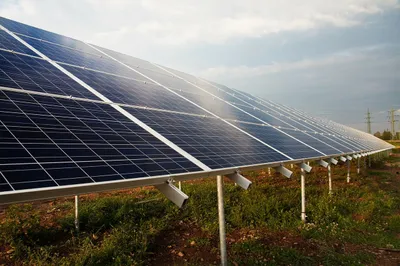
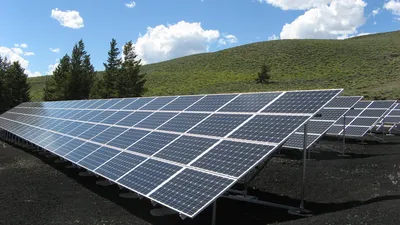
Standalone panels ranging from 50W to 400W designed to charge power stations, 12V batteries, RVs, boats, and off-grid systems. These are larger than portable chargers and meant for semi-permanent or base-camp setups.
Rigid panels deliver the highest efficiency but aren't portable. Foldable panels trade some efficiency for packability. Flexible panels can conform to curved surfaces like RV roofs and boat decks but typically have shorter lifespans than rigid alternatives.
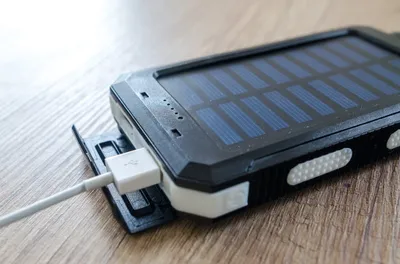
Hybrid devices that combine a battery bank with a small built-in solar panel. They charge primarily via USB but can trickle-charge from sunlight as a backup. Realistic expectations matter here -- most built-in panels are too small to fully recharge the battery from solar alone in a reasonable timeframe. They're best thought of as battery packs with a solar emergency backup, not true solar chargers.
Free fuel after the initial purchase, zero noise, zero emissions, independence from the grid, and reliability in emergencies. Those are the practical advantages that drive adoption.
Solar devices didn't gain traction on environmental idealism alone. Every benefit addresses a specific, real-world limitation of traditional power sources.
Once you own a solar panel or solar-powered device, sunlight is free. A portable power station that costs $300 upfront and gets recharged by solar panels costs nothing to run for years. Compare that to a gas generator burning $5-15 of fuel per day of use.
Solar panels produce zero noise. Gas generators run at 50-80 decibels -- roughly the volume of a vacuum cleaner to a food blender. For camping, tailgating, outdoor events, and emergency home backup, the silence of solar is a genuine quality-of-life advantage.
No combustion means no carbon monoxide, no exhaust fumes, and safe indoor-adjacent use. Gas generators can only run outdoors due to CO poisoning risk. Solar power stations operate safely inside tents, RVs, apartments, and anywhere else you need power.
Every watt you generate from solar is a watt you don't pull from the grid. During power outages -- which increased 60% in frequency across the US between 2015 and 2023 according to EIA data -- solar plus battery storage keeps essential devices running when the grid goes dark.
Solar panels have no moving parts. There's nothing to oil, no filters to replace, no spark plugs to change. A quick wipe-down to clear dust and debris is the extent of routine maintenance for most solar devices.
Sunlight hits the photovoltaic cells, knocking electrons free in the silicon semiconductor. Those electrons flow as direct current (DC) through a circuit, which either charges a battery directly or passes through an inverter to create alternating current (AC) for standard appliances.
Charge controllers sit between the panel and battery, regulating voltage and current to prevent overcharging. MPPT (Maximum Power Point Tracking) controllers are the current standard -- they optimize the power conversion in real time, extracting up to 30% more energy from the same panel compared to older PWM (Pulse Width Modulation) controllers.
Panel efficiency determines how much of the sunlight hitting the surface actually converts to electricity. Consumer monocrystalline panels typically achieve 20-24% efficiency, meaning a 100W-rated panel produces 100W only under ideal laboratory conditions (1,000 watts per square meter of irradiance, 25C cell temperature). Real-world output is usually 70-85% of the rated wattage due to angle, temperature, cloud cover, and other factors.
Battery chemistry matters too. Lithium iron phosphate (LiFePO4) batteries have become the standard in quality power stations -- they handle 2,500-3,500 charge cycles before degrading to 80% capacity, compared to 500-800 cycles for standard lithium-ion (NMC) cells. That difference translates to roughly 7-10 years of daily use versus 2-3 years.
For most portable and backup power needs, solar beats traditional options on lifetime cost, noise, and maintenance. Gas generators still win on raw power output and all-weather reliability.
| Feature | Solar Devices | Gas Generators | Battery Packs (non-solar) | Grid Power |
|---|---|---|---|---|
| Ongoing Fuel Cost | $0 | $5-15/day | $0.05-0.15/charge | Variable |
| Noise Level | Silent | 50-80 dB | Silent | Silent |
| Emissions | None | CO, CO2, NOx | None | Varies by source |
| Indoor Safe | Yes | No (CO risk) | Yes | Yes |
| Upfront Cost | Moderate-High | Low-Moderate | Low-Moderate | N/A |
| Recharge Time | 4-8 hours (sun) | Instant (fuel) | 1-4 hours (wall) | Instant |
| Weather Dependent | Yes | No | No | Partially |
| Maintenance | Minimal | Regular (oil, filters) | Minimal | N/A |
| Lifespan | 10-25 years (panels) | 5-10 years | 2-5 years | N/A |
| Portability | Good-Excellent | Poor-Fair | Excellent | Fixed |
Gas generators still make sense for sustained high-wattage needs in all weather conditions -- running a construction site, powering an entire house during a multi-day outage, or operating heavy equipment. Solar can't match a 5,000W generator for raw continuous output.
But for keeping phones charged, running laptops, powering lights, operating small appliances, and maintaining essential devices during outages, solar power stations have become the smarter choice for the majority of users. The upfront cost premium pays back within 1-3 years of regular use when compared to fuel and maintenance costs for generators.
Five things matter most: wattage and capacity for your needs, panel efficiency and cell type, build quality and weather resistance, port selection, and brand reputation with warranty backing.
Add up the wattage of the devices you need to charge or power. A smartphone draws about 5-10W, a laptop 30-65W, a portable fridge 40-60W, and a CPAP machine 30-60W. Your solar panel wattage should exceed your total draw to account for real-world efficiency losses.
Look for monocrystalline panels with efficiency ratings of 22% or higher. Lower efficiency means more surface area needed for the same power output -- a 15% efficient panel needs to be nearly 50% larger than a 22% panel to produce identical wattage.
IP ratings indicate weather resistance. IP65 handles rain and dust. IP67 survives temporary submersion. For outdoor use, anything below IP54 is a liability in unpredictable weather. Check the frame material too -- aluminum frames outlast plastic by years.
USB-A, USB-C with PD (Power Delivery), 12V DC, and AC outlets each serve different devices. Make sure your chosen product has the right mix. USB-C PD at 60W or higher is increasingly important as laptops and tablets adopt USB-C charging.
Established brands like Jackery, EcoFlow, Bluetti, Anker, and Goal Zero provide real warranties (typically 2-5 years), responsive customer support, and documented safety certifications (UL, FCC). No-name Amazon sellers offering similar specs at half the price rarely match on longevity or safety testing.
The brands that consistently perform across independent testing: Jackery, EcoFlow, Bluetti, Anker, Goal Zero, and Renogy.
Jackery pioneered the portable power station category for consumers and maintains the broadest product lineup from 240Wh entry-level units to 3,000Wh whole-home backup systems. Their Explorer series is the benchmark others measure against.
EcoFlow has pushed the technology forward with faster solar charging speeds and modular battery expansion. Their DELTA series accepts higher solar input wattages than competitors, meaning faster recharge times in the field.
Bluetti targets the mid-range with strong value propositions -- LiFePO4 batteries across most of their lineup at price points below Jackery and EcoFlow for comparable capacity. Their AC200 series is a workhorse for off-grid setups.
Anker dominates the portable charger space with panels and power banks that emphasize compact design and reliable smart charging. Their 625 solar panel is one of the best-selling foldable chargers for a reason.
Goal Zero pioneered solar for the outdoor recreation market and maintains a loyal following among backpackers and overlanders. Their Yeti power stations pair seamlessly with their Boulder and Nomad panel lines.
Renogy focuses on larger solar panels and complete off-grid kits for RVs, vans, boats, and cabins. If you need more than a portable charger -- think permanent or semi-permanent installations -- Renogy's panel selection is hard to beat.
Solar devices are about as low-maintenance as electronics get. Keep the panels clean, store batteries properly, and avoid extreme temperatures during storage. That covers 90% of what you need to do.
Quick maintenance reference:
Dust, pollen, bird droppings, and tree sap reduce output by blocking light from reaching the cells. A soft cloth with clean water restores full performance. Never use abrasive cleaners, pressure washers, or rough scrub pads -- micro-scratches in the glass or coating permanently reduce efficiency.
LiFePO4 and lithium-ion batteries both degrade faster when stored at full charge or fully depleted for extended periods. The sweet spot for long-term storage is 40-60% state of charge in a cool, dry environment. Most quality power stations have a storage mode or battery management system that helps maintain this range.
Solar panels degrade slowly -- most lose only 0.5-1% efficiency per year, meaning a 25-year-old panel still produces 75-87% of its original output. Replace panels when physical damage (cracks, delamination, broken cells) is visible or output drops below useful levels for your needs.
Power station batteries typically need replacement when they hold less than 60-70% of original capacity and no longer meet your runtime needs. LiFePO4 units reach this point after 2,500-3,500 cycles under normal use -- that's roughly 7-10 years of daily cycling.
Yes, but at reduced output. Expect 10-25% of rated wattage under heavy cloud cover and 50-70% under light overcast. High-efficiency monocrystalline panels perform better in low-light conditions than polycrystalline or thin-film alternatives.
A 20W solar panel in direct sunlight charges most smartphones in 2-3 hours. A 10W panel takes 3-5 hours. Cloudy conditions, panel angle, and cable quality all extend those times. Using a panel with smart IC charging circuitry ensures the fastest possible charge for your specific device.
For anyone who camps regularly, works remotely, lives in an area with frequent power outages, or wants emergency preparedness -- yes. A 500Wh power station paired with a 100W panel pays for itself within 1-2 years compared to the cost of renting a generator or buying disposable batteries.
Solar panels actually perform slightly better in cold temperatures due to reduced heat-related efficiency loss. The challenge in winter is shorter daylight hours and lower sun angles, not temperature. Snow must be cleared from panels for them to produce power, but cold-weather output per hour of sun can exceed summer output.
Quality solar panels carry 25-year warranties and typically continue producing useful power well beyond that. Annual degradation of 0.5% means a panel still delivers about 87% of its original output after 25 years. Portable and foldable panels have shorter lifespans due to mechanical wear from folding and transport, typically 5-10 years with regular use.
Solar devices have reached the point where they're practical, affordable, and reliable enough for everyday use. The technology delivers real savings, genuine convenience, and meaningful backup power -- not just for off-grid enthusiasts, but for anyone who wants to reduce their dependence on the grid and fuel-burning alternatives.
The key is buying smart. Stick with monocrystalline panels from established brands, match the wattage and capacity to your actual needs, and don't fall for inflated specs on no-name products. Do that, and your solar setup will pay for itself and keep delivering free power for years.
roundup We tested 7 solar keyboards on indoor charging speed, dark-mode battery life, and key feel. See which handles real office lighting - not just bright sunlight.
 roundup
 We compared 7 solar micro inverters on CEC efficiency, module fit, and warranty length. See how Enphase IQ7 stacks up against budget grid-tie options in 2026.
 roundup
 We compared 10 solar gate openers by weight capacity, daily cycles, wattage, and remote range. Best picks for swing and slide gates - no electrician needed.
 roundup
 10 solar STEM kits for kids ages 5–14, from 12-in-1 robot builders to balloon experiments. Rated by age-appropriateness, build quality, and learning value.
 roundup
 10 solar air pumps for ponds and aquariums rated by L/min output, noise level, and battery backup. Find the right aerator for your water feature or fish tank.
 roundup
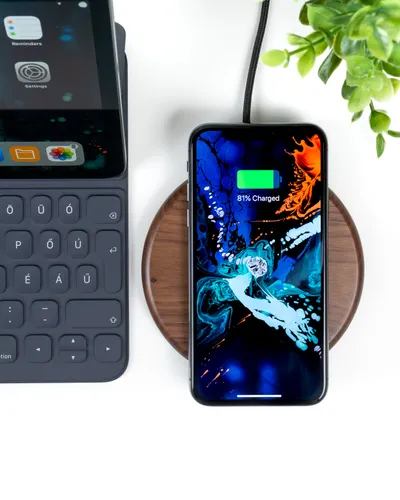
 10 solar phone chargers ranked by wattage, charge speed, and weight. Foldable and panel-based picks tested for hiking, camping, and travel in 2026.
 roundup
 We compared 10 solar ovens and cookers by max temperature, cook time, weight, and capacity. Box-style vs vacuum tube designs tested - see which cooks fastest.
 roundup
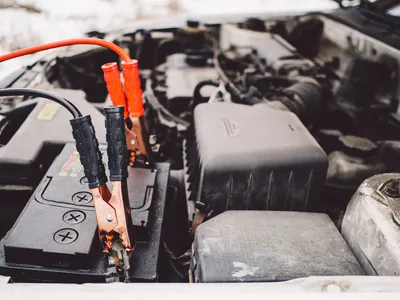
 We compared 10 solar trickle chargers and jump starters by wattage, cell type, and weather resistance. Best picks for cars, boats, and motorcycles year-round.
 roundup
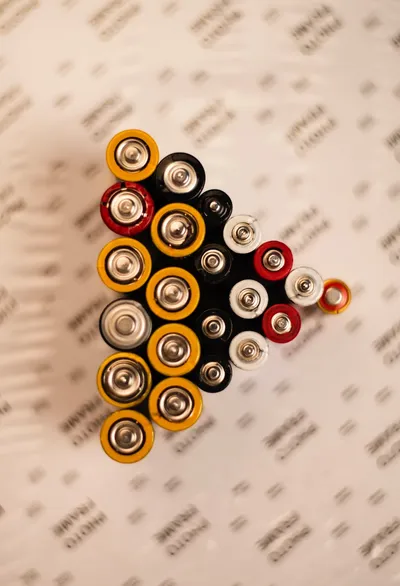
 We compared 10 solar battery brands on NiMH vs NiCd chemistry, cycle life, and self-discharge. Find the best rechargeable battery for your solar setup in 2026.
 roundup
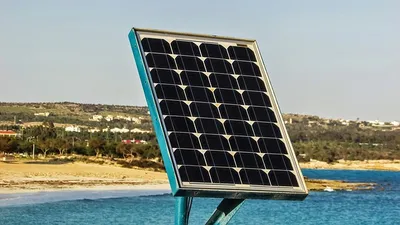
 We compared 10 500W solar panel systems on panel count, MPPT vs PWM controllers, and daily output for RVs, boats, and off-grid cabins in 2026.
 roundup
 10 solar watches compared on power reserve, water resistance, and indoor charging. Casio G-Shock and Citizen Eco-Drive models tested side by side in 2026.
 roundup
 We compared 7 solar keyboards for Mac on indoor charging speed, Bluetooth reliability, and low-light battery life. Find your best solar Mac keyboard for 2026.