Jake Harmon, Solar Energy Specialist at Solar Power Nerd
Verified author
Solar Energy Specialist

Jake Harmon

I got into solar after installing a 6kW system on my own roof and realizing that half the "advice" online was just repackaged marketing copy. Now I spend most of my time testing panels, batteries, chargers, and lights so other people can skip the trial and error I went through.

Self-funded reviews Since 2019 Colorado
208+
Articles written and maintained
123
Product reviews and roundups
7 yrs
Testing solar gear full-time
6kW
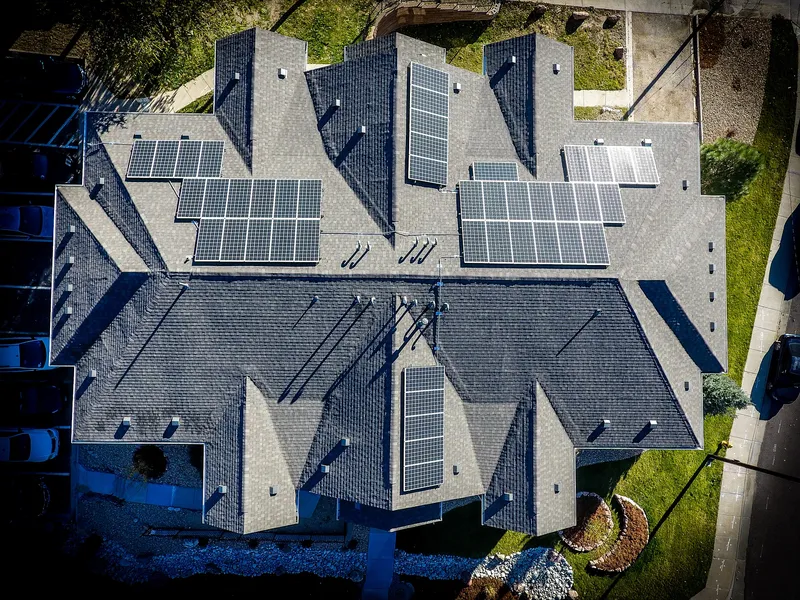
Home rooftop system I installed myself

I installed solar panels on my roof, got obsessed, and it turned into this

In 2019, I got three quotes for a home solar install in Colorado. The prices ranged from $14,000 to $28,000 for basically the same system. That spread made no sense to me, so I started reading everything I could find about panels, inverters, and battery storage. I ended up doing a lot of the install work myself with a licensed electrician handling the final connection.

Once the rooftop system was running, I started tracking production numbers obsessively. Daily output, seasonal variation, how much shade from the neighbor's elm tree actually cost me per month. I built spreadsheets. I bought a watt meter. I started comparing my real numbers to what the installer's modeling software had predicted. Spoiler: they weren't even close in winter.

Around the same time, I bought a portable solar panel for car camping. It claimed 100 watts. I measured it at 62 watts in direct Colorado sun at noon. That was the moment I realized that most solar product specs are best-case lab numbers, not what you'll actually get outside.

I started buying more gear just to test it. Garden lights, power stations, solar phone chargers, RV kits. I'd measure the real output, track how long things lasted, and write up my notes. After about 30 products, a friend suggested I turn the notes into a website. That was 2020, and I haven't stopped since.

This site is basically my testing notebook turned public. I buy the products, measure them, use them for weeks, and tell you what I found. If a panel only hits 60% of its rated wattage, I'll tell you. If a $30 garden light outperforms a $90 one, I'll tell you that too.
The topics where I have enough hours to trust my own data

I'm not going to pretend I know everything about solar. But in these categories, I've tested enough products and tracked enough numbers that I'm confident calling out what works and what doesn't.

Panels, chargers, and power stations

This is where the site started. I've measured real wattage output on foldable panels from 10W to 200W, drained power stations from 200Wh to 3,000Wh under load, and compared solar battery banks at every price point. I know which brands hit their rated specs and which ones are 30-40% short.

42 device reviews published

Solar lights for yards, paths, and security

I've tested over 50 solar lights with a lux meter. Path lights, floodlights, string lights, wall sconces. I measure real brightness at ground level, time how long they stay on after a full charge, and check whether they still work after a Colorado winter. Most lumen claims are wildly inflated.

50 lighting reviews published

Residential solar and home energy

I live with a rooftop system. I track my own production data monthly, so when I write about payback periods, panel degradation, or battery sizing, I'm drawing from my own utility bills and monitoring dashboard, not a calculator on some installer's website.

19 home solar reviews published

Camping and off-grid solar

I car camp in Colorado about 15 weekends a year, and most of that time I'm running solar gear. I test panels at altitude, in tree shade, on cloudy mornings, and in wind. If something works great on a sunny driveway but falls apart at a campsite, that's the kind of thing I catch.

12 outdoor reviews published

How solar technology works

I write the explainers I wish existed when I was starting out. Mono vs. poly panels, MPPT vs. PWM controllers, lithium-ion vs. LiFePO4 batteries, string vs. micro-inverters. I try to explain the tradeoffs in plain language without dumbing down the parts that actually matter for buying decisions.

85 guides published

Watt meters and real-world measurement

I own three different watt meters, a lux meter, and a thermal camera. I measure what products actually produce under real conditions, not what the spec sheet promises. When I say a panel makes 65W in full sun, that's a number I read off a meter on my deck, not something I pulled from the product listing.

Used in every product test

What happens between the box arriving and the review going live

I order it myself, hook up a watt meter, use it like I would on my own roof or campsite, and write down the numbers. No studio lighting, no spec sheet rewording. Just what happened.

  1. 1

    I pay for everything

    I order from Amazon or direct from the manufacturer, same as you would. No free samples, no PR boxes. If a company sends me something unsolicited it goes back or gets donated. The moment you accept free product, you start writing differently whether you notice it or not.

  2. 2

    Watt meter goes on first

    Before I even read the manual, I plug in my meter and check what the panel or battery actually puts out. A "200W" portable panel that peaks at 140W in direct Colorado sun is not a 200W panel. Lumen readings on lights, capacity tests on power stations, charge times on controllers. The number on the listing is marketing. The number on the meter is the review.

  3. 3

    Sun, shade, clouds, repeat

    I test panels in full noon sun, in partial tree shade, and on overcast mornings. I run solar lights through a full night cycle and check brightness at midnight and again at 5 AM. Power stations get loaded with real appliances, not calculated estimates. Colorado gives me 300 days of sun and plenty of afternoon thunderstorms, so I get both extremes without trying.

  4. 4

    Minimum four weeks of daily use

    Everything goes into my regular rotation for at least a month. Panels sit on my patio and get rained on. Lights stay in the yard through wind and hail. Power stations charge my phone and run my camp fridge on weekends. The problems that actually matter show up in week three, not on day one out of the box.

  5. 5

    Dig through the 2-star and 3-star reviews

    I read hundreds of verified Amazon reviews for every product I cover. The useful ones are almost never the 5-star or 1-star ratings. The 2-star and 3-star reviews are where people describe exactly what failed and when. If I see the same complaint about a panel's junction box cracking or a light's sensor dying after six months from a dozen different buyers, that goes in the article.

  6. 6

    Price check every six months, full re-test every year

    Solar product pricing moves constantly, especially around spring and Black Friday. I verify prices and stock twice a year and do a complete re-rank annually. If a panel gets discontinued or a newer model passes the same tests for less money, the article changes. The date at the top of every post shows when I last went through it.

How I keep this site worth reading

When something gets removed

A product leaves a ranking when it gets discontinued, when the price rises past what it earned its spot at, or when an annual re-test turns up a problem I missed the first time. I don't quietly edit lists. I re-rank from scratch once a year and check prices and availability every six months. The affiliate disclosure is on the disclosure page if you want the full details.

Nobody buys a spot

I've had emails from solar panel brands, power station companies, and lighting manufacturers offering free product or flat payments for a review. All declined. If a product shows up on this site, it went through the same process as everything else. There is no fast track and no sponsored tier.

I fix mistakes publicly

If you find a factual error, email me and I will correct it within a couple of days. When a correction changes the substance of a review, I add a dated note at the bottom of the post so you can see what changed. Rankings shift when the market shifts or when a re-test produces different results. They do not shift because a brand asked nicely.

Sources, not spec sheets

When I reference efficiency ratings, energy output data, or panel certifications, I link to the source. That usually means NREL reports, EIA statistics, IEC standards documents, or published research. I do not cite manufacturer marketing pages as evidence. If the only source for a claim is the company selling the product, it doesn't go in the article.

Have a correction or a product you want me to look at?

If I got a number wrong or you want to suggest something for a future review, send me a note. I read every email.

Contact Us