The solar industry moves fast. New panel technologies, shifting incentive programs, changing battery chemistries, updated building codes -- what was true two years ago might not be true today. That pace of change creates a knowledge gap that manufacturers and installers are happy to fill with sales pitches instead of facts.
These guides exist to close that gap. We break down how solar technology actually works, what the real costs and savings look like, how to separate legitimate products from overhyped junk, and how to maintain solar equipment for maximum lifespan and performance.
Whether you're researching your first portable solar charger or evaluating a $25,000 rooftop installation, informed buyers make better decisions. And in a market where a bad purchase can mean thousands of wasted dollars or years of underperforming equipment, knowledge isn't optional -- it's the most valuable tool you have.
Each guide on this site is written to give you the information you'd need to walk into a solar purchase or conversation and know exactly what questions to ask, which specs matter, and which marketing claims to ignore.
Why Solar Knowledge Matters
The solar market is full of inflated claims, misleading specs, and products that look identical on paper but perform very differently in practice. Understanding the fundamentals protects you from bad purchases and helps you maximize the return on good ones.
Consider this: a 100W solar panel rated at 23% efficiency from a reputable manufacturer and a 100W panel rated at 23% efficiency from an unknown brand might look the same on a product listing. But the first might use premium monocrystalline cells with anti-reflective coating and bypass diodes for shade tolerance, while the second uses B-grade cells with no shade mitigation. Same specs on paper, dramatically different performance in your yard.
Solar knowledge also matters for financial decisions. The difference between understanding net metering, time-of-use rates, the federal ITC, state rebates, and SRECs can mean thousands of dollars in savings -- or thousands left on the table -- over the life of a solar system.
And maintenance knowledge extends equipment life. Knowing when to clean panels, how to monitor output degradation, when to replace batteries, and how to troubleshoot charge controller errors can add years of productive life to your solar investment.
Types of Solar Guides We Cover
Five guide categories serve different stages of the solar journey: technology explainers, buying guides, cost and savings analysis, maintenance how-tos, and myth-busting articles.
Technology Explainers
How photovoltaic cells convert sunlight to electricity. The differences between monocrystalline, polycrystalline, and thin-film panels. How MPPT vs. PWM charge controllers work. Battery chemistry comparisons -- lithium-ion vs. LiFePO4 vs. lead-acid. Inverter types and sizing. These guides give you the technical foundation to evaluate any solar product or system.
Buying Guides
Step-by-step frameworks for choosing solar panels, power stations, chargers, lights, and home systems. We cover what specs to prioritize, which brands deliver consistent quality, what price ranges are reasonable, and which red flags to watch for in product listings. Every buying guide is built around real purchasing scenarios.
Cost and Savings Analysis
Real-world cost breakdowns for residential solar systems, portable solar setups, and solar accessories. We calculate payback periods, lifetime savings versus grid power, and the true cost per kilowatt-hour of solar energy across different system sizes and locations. No cherry-picked numbers -- we show best-case and worst-case scenarios.
Maintenance How-Tos
Practical guides for cleaning solar panels, replacing batteries, troubleshooting low output, winterizing solar equipment, and extending the life of portable and residential solar systems. Step-by-step instructions with no assumed expertise.
Myth-Busting Articles
Solar attracts more misinformation than almost any other consumer technology. We tackle the persistent myths head-on: solar doesn't work in cloudy climates (it does), solar panels don't pay for themselves (they do), solar panels require constant maintenance (they don't), and other misconceptions that prevent people from making informed decisions.
Understanding Solar Panel Technology
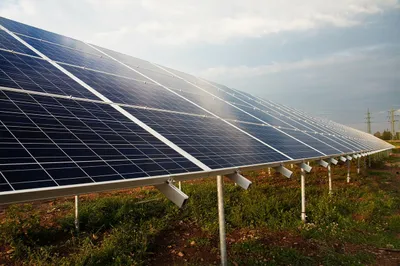
Three panel technologies dominate the consumer market, each with distinct advantages in efficiency, cost, flexibility, and durability. Understanding the differences helps you choose the right panel for your specific application.
Monocrystalline Silicon
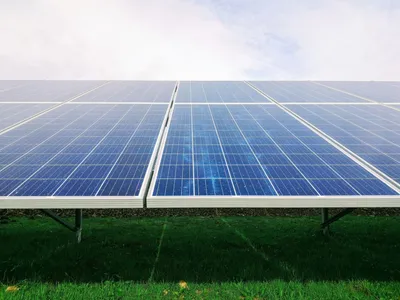
Made from single-crystal silicon wafers, these are the most efficient consumer panels at 20-24%. The uniform crystal structure allows electrons to flow more freely, generating more electricity per square inch than other cell types. They're recognizable by their black or dark blue color and rounded-corner cells.
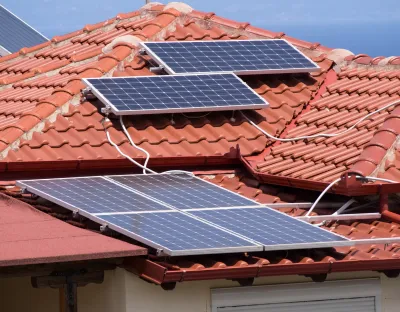
Monocrystalline panels cost more per watt but produce more power in less space. They're the best choice when roof space or pack space is limited -- which is why they dominate both residential rooftop and portable panel markets.
Polycrystalline Silicon
Made from multiple silicon crystals melted together, these panels run 15-18% efficiency. The multi-crystal structure creates grain boundaries that reduce electron flow compared to monocrystalline. They're recognizable by their blue speckled appearance.
Polycrystalline panels cost less per watt but require more surface area for the same output. They make sense for ground-mount installations where space isn't a constraint and budget is the priority.
Thin-Film
Made by depositing thin layers of photovoltaic material (cadmium telluride, amorphous silicon, or CIGS) onto a substrate. Efficiency runs 10-13% for consumer products. The main advantages are flexibility (they can bend to fit curved surfaces) and light weight.
Thin-film is used in specialty applications like flexible RV panels, building-integrated photovoltaics, and some portable chargers. The lower efficiency is offset by the ability to install on surfaces where rigid panels won't fit.
Emerging Technologies
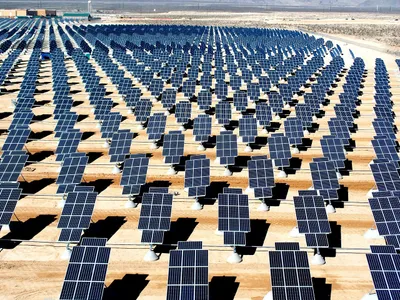
Perovskite solar cells, tandem (multi-junction) cells, and bifacial panels represent the next generation. Perovskite cells have reached 26%+ efficiency in laboratory settings and could dramatically reduce manufacturing costs. Bifacial panels generate power from both sides, capturing reflected light from the ground, and are starting to appear in residential installations. These technologies are worth watching but aren't yet dominant in consumer products.
Solar Energy Basics Explained
Solar energy conversion is straightforward physics. Photons from sunlight strike semiconductor material in a solar cell, knocking electrons free from their atoms. Those free electrons flow through a circuit as electrical current. The more photons that hit the cell, the more electricity it produces.
Key Terms You Need to Know
Watts (W): The rate of energy production at a given moment. A 100W panel produces 100 watts of power under ideal conditions (Standard Test Conditions: 1,000 W/m2 irradiance, 25C cell temperature, AM 1.5 spectrum).
Watt-hours (Wh): Energy produced or consumed over time. A 100W panel running for 5 hours produces 500Wh. A laptop consuming 50W for 4 hours uses 200Wh. Matching production (Wh from solar) to consumption (Wh from devices) is the fundamental equation of solar sizing.
Kilowatt-hours (kWh): 1,000 watt-hours. The unit your electric company uses on your bill. A 6kW residential solar system producing 5 hours of peak output generates roughly 30 kWh per day.
Efficiency: The percentage of sunlight energy that a panel converts to electricity. A 22% efficient panel converts 22% of the solar energy hitting its surface into usable electrical energy. The rest becomes heat.
Peak Sun Hours: The number of hours per day when solar irradiance averages 1,000 W/m2. This varies by location and season. Phoenix averages 6.5 peak sun hours daily, while Seattle averages 3.5. Multiply your panel wattage by peak sun hours to estimate daily energy production.
The Solar Energy Chain
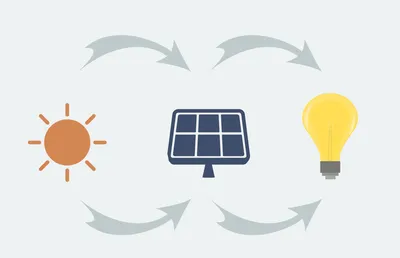
From sun to usable power, the chain runs: sunlight hits panel, panel generates DC electricity, charge controller regulates voltage, DC power charges battery or flows to inverter, inverter converts DC to AC for household appliances. At each step, small amounts of energy are lost to heat and conversion inefficiency. A well-designed system loses 15-25% from panel rated output to delivered AC power.
Cost, Savings, and ROI
Solar economics are straightforward when you use real numbers instead of marketing projections. The calculation comes down to: system cost minus incentives, divided by annual energy savings, equals payback period. Everything after payback is profit.
Residential Solar Economics
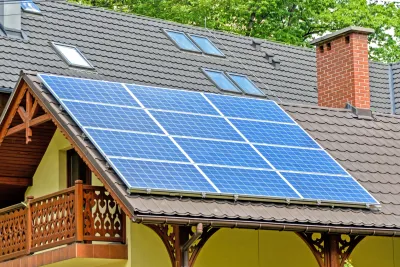
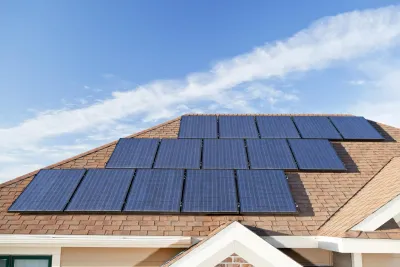
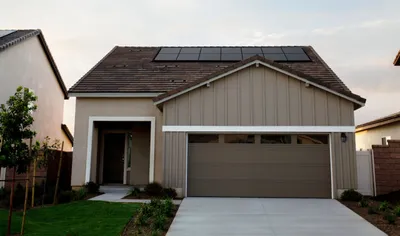
A typical 8kW residential system costs $16,000-$24,000 before incentives. The 30% federal ITC drops that to $11,200-$16,800. A household using 900 kWh/month at $0.15/kWh spends $1,620/year on electricity. If solar offsets 85% of that, annual savings are roughly $1,377. Payback period: 8-12 years. Remaining productive life after payback: 13-17+ years of near-free electricity.
Portable Solar Economics
A $250 power station and $100 solar panel that replace a $500/year generator fuel and maintenance habit pay back in 9 months. A $30 solar lantern that replaces $15/year in batteries pays back in 2 years but lasts 5-7 years -- net savings of $75-$100 over its lifetime.
The Long View
Electricity rates have risen 2-3% annually for two decades. Solar system output degrades 0.5% annually. Over 25 years, your solar savings accelerate while grid costs compound. A system that saves $1,400 in year one might save $2,200 in year 15 simply because grid rates have risen while your solar cost is fixed at $0.
How to Evaluate Solar Products
Five evaluation criteria separate quality solar products from the ones that disappoint: real-world efficiency, build quality and certifications, battery chemistry, brand track record, and warranty terms.
Real-World Efficiency
Manufacturers rate panels under Standard Test Conditions that don't exist in your yard. Expect 70-85% of rated output in real-world conditions. A "100W" panel realistically produces 70-85W during peak sun. Products that publish only STC ratings without acknowledging real-world performance gaps are being deliberately misleading.
Certifications Matter
Look for UL (Underwriters Laboratories) certification for electrical safety, IEC 61215 for panel performance standards, IP ratings for weather resistance, and FCC certification for electronic devices. Products without these certifications have not been independently tested for safety or performance claims.
Battery Chemistry
LiFePO4 batteries cost more but deliver 2,500-3,500 cycles, superior thermal stability, and safer chemistry. Standard lithium-ion (NMC) delivers 500-800 cycles at lower cost. Lead-acid is cheap but heavy, offers only 200-500 cycles, and loses capacity in cold weather. For any solar product you'll use for years, LiFePO4 is the smart investment.
Brand Research
Established solar brands (Jackery, EcoFlow, Bluetti, Renogy, Goal Zero) invest in R&D, honor warranties, and maintain customer support teams. No-name Amazon sellers offering identical specs at half the price are typically cutting costs on cell quality, battery chemistry, charge controller quality, and safety testing. The risk/reward ratio favors known brands for solar purchases.
Warranty Red Flags
Quality solar panels carry 25-year performance warranties. Power stations carry 2-5 year warranties. If a seller offers a 1-year warranty on a product that should last a decade, they're not confident in their own product. If there's no warranty information at all, walk away.
Common Solar Myths Debunked
Misinformation slows solar adoption more than any technical limitation. These are the myths that come up most often, and the facts that counter them.
Myth: Solar Doesn't Work in Cloudy or Cold Climates
Fact: Germany, one of the world's top solar producers, gets less annual sunshine than most US states. Cloudy days reduce output but don't eliminate it -- panels produce 10-25% of rated output under heavy clouds and 50-70% under light overcast. Cold temperatures actually increase panel efficiency. Seattle, Portland, and Chicago all have viable solar economics.
Myth: Solar Panels Require Constant Maintenance
Fact: Solar panels have no moving parts. Routine maintenance amounts to occasional cleaning (or just letting rain do it) and annual visual inspection. The most maintenance-intensive component is the inverter, which typically needs replacement once during a 25-year panel lifespan. Total maintenance cost over 25 years is typically $200-500 for a residential system.
Myth: Solar Panels Don't Last Long Enough to Pay for Themselves
Fact: Modern solar panels are warrantied for 25 years and commonly produce useful power for 30-40 years. Average residential payback is 6-12 years. That leaves 13-29+ years of post-payback energy production -- equivalent to tens of thousands of dollars in avoided electricity costs.
Myth: Solar Energy Is Too Expensive
Fact: The cost of solar electricity has dropped 89% since 2010 according to IRENA data. Utility-scale solar is now the cheapest new electricity source in most markets worldwide. Residential solar reaches grid parity (cost equal to utility electricity) in most US states when incentives are included.
Myth: Manufacturing Solar Panels Creates More Pollution Than They Prevent
Fact: The energy payback period for manufacturing a solar panel is 1-4 years, depending on technology and location. Over a 25-year lifespan, a panel generates 10-20x more clean energy than was used to manufacture it. The net environmental benefit is overwhelmingly positive.
Maintenance and Troubleshooting
Most solar problems have simple causes and simple fixes. Low output is usually dirty panels or shading. No output is usually a connection issue. Knowing the common failure modes saves you from unnecessary service calls and product replacements.
Quick troubleshooting reference:
- Low output: Check for dirt, shade, or snow on panels
- No output: Check cable connections, fuse, and charge controller indicator
- Battery not charging: Verify battery temperature is above 32F (0C) for lithium
- Intermittent charging: Check for loose connectors or damaged cables
Panel Cleaning
Dirty panels lose 10-25% of output. Clean with water and a soft cloth or sponge. Never use abrasive cleaners, pressure washers, or rough brushes -- micro-scratches in the glass permanently reduce light transmission. Clean early morning or late afternoon to avoid thermal shock from cold water hitting hot panels.
Battery Maintenance
Store lithium batteries at 40-60% charge in temperatures between 50-77F (10-25C) for maximum longevity. Avoid deep discharges below 20% and prolonged storage at 100% charge. Most modern solar products include battery management systems (BMS) that handle this automatically, but understanding the principles helps you make better storage decisions.
When to Call a Professional
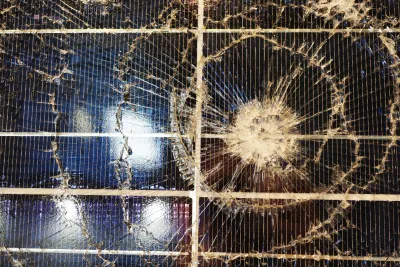
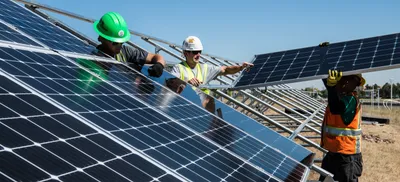
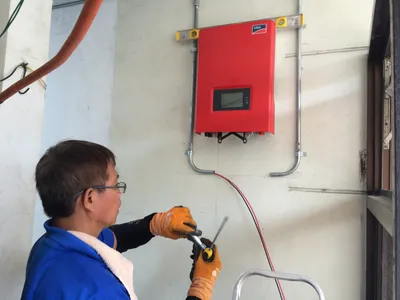
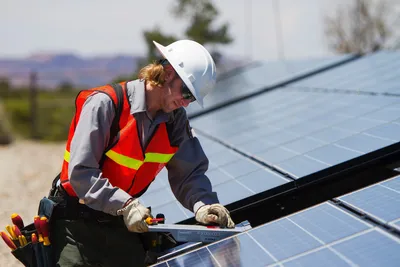
Any electrical issue beyond cleaning and cable checks on a residential system should involve a licensed solar technician. Ground faults, inverter errors, panel micro-cracks, and wiring degradation require specialized tools and training to diagnose and repair safely. For portable gear, contact the manufacturer's support team before attempting repairs that could void your warranty.
Frequently Asked Questions
What's the best solar panel type for beginners?
Monocrystalline. It offers the best efficiency-to-size ratio, performs well in partial shade compared to polycrystalline, and is the standard in both portable and residential panels from reputable brands. You pay slightly more per watt but get more power from less space.
How do I calculate how much solar I need?
List every device you want to power and its wattage. Multiply wattage by hours of daily use to get daily watt-hours (Wh). Divide total daily Wh by your location's peak sun hours to get required panel wattage. Add 20-30% buffer for real-world efficiency losses. Example: 500Wh daily need divided by 5 peak sun hours = 100W panel minimum, plus buffer = 120-130W recommended.
Is it worth waiting for newer solar technology?
No. Current solar technology is mature, efficient, and cost-effective. Waiting for "the next breakthrough" means years of paying full electricity rates or carrying disposable batteries while the technology you can buy today delivers real savings immediately. Incremental improvements will continue, but the fundamentals are already well-established.
Do I need an electrician to install solar?
For portable solar devices and garden products, no. For residential rooftop systems, yes -- electrical permits, code compliance, utility interconnection, and safety all require licensed professionals. Ground-mount systems in some jurisdictions can be owner-installed with a permit, but check your local building codes first.
What happens to solar panels at end of life?
Solar panels are recyclable. The glass, aluminum frame, copper wiring, and silicon cells can all be recovered. Specialized recycling programs are expanding as the first generation of residential panels reaches end of life. The EU mandates solar panel recycling; the US market is developing similar infrastructure. Most panels still produce useful power at 30-40 years, so end-of-life is a distant concern for current buyers.
The Bottom Line
Solar knowledge is the foundation of every good solar decision. Understanding how the technology works, what realistic performance looks like, how to evaluate products and claims, and how to maintain your equipment ensures you get maximum value from every solar dollar you spend.
The guides on this site are built around real-world testing, verified data, and practical experience -- not manufacturer talking points. Use them to make informed decisions, avoid common pitfalls, and get the most from solar technology at every scale, from a $30 lantern to a $30,000 home system.
 SolarPowerNerd

 guide
guide