 SolarPowerNerd


Battery chemistry is the single biggest decision in solar storage, and it affects cost, lifespan, weight, and depth of discharge. LiFePO4 batteries deliver 3,000 to 5,000 deep cycles at 100% depth of discharge and weigh a third of comparable lead acid units, but they cost two to three times more upfront.
AGM and gel batteries work well for tighter budgets and lower-demand setups, though they should only be discharged to 50% to preserve cycle life.
Cycle life is where the real cost math happens. A LiFePO4 battery at 5,000 cycles costs pennies per cycle over its lifespan, while an AGM battery at 500 to 800 cycles needs replacement several times over the same period.
Charge controllers also need to match the battery chemistry, since a standard lead acid charger will damage a lithium cell, and a lithium charger can overcharge an AGM.
Quick Comparison Chart
| # | Product | Our Rating | ||
|---|---|---|---|---|
| 1 |  |
Battle Born 100Ah LiFePO4 12V Deep Cycle Battery | ★★★★★ | Check Price |
| 2 | 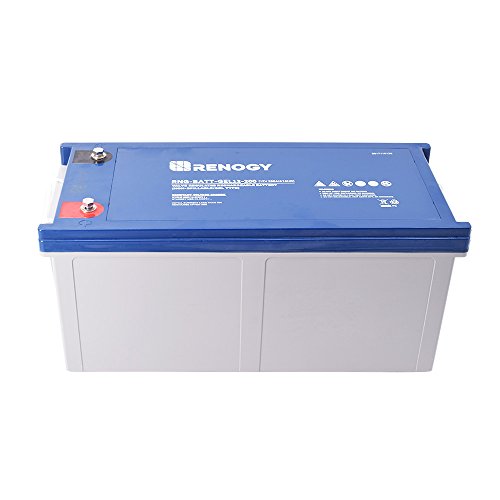 |
Renogy 12V 200Ah Deep Cycle Pure Gel Battery | ★★★★★ | Check Price |
| 3 |  |
ExpertPower EXP33 12V 33Ah SLA AGM Battery | ★★★★☆ | Check Price |
| 4 | 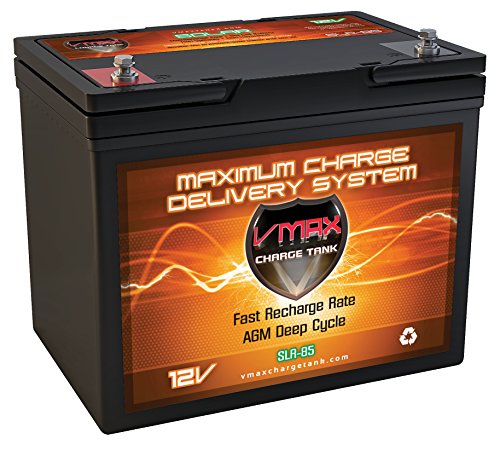 |
Vmaxtanks SLR85 12V 85Ah AGM Deep Cycle Battery | ★★★★☆ | Check Price |
| 5 |  |
Mighty Max 12V 35Ah GEL Deep Cycle Battery | ★★★★☆ | Check Price |
| 6 |  |
Goal Zero Yeti Power Station Battery | ★★★★☆ | Check Price |
| 7 |  |
Chrome Battery Solar Energy Storage Battery | ★★★★☆ | Check Price |
| 8 |  |
Energizer Power Plus Rechargeable AA Batteries | ★★★★☆ | Check Price |
| 9 |  |
Amazon Basics 16-Pack Rechargeable AA NiMH Batteries | ★★★★☆ | Check Price |
| 10 |  |
Uxcell Rechargeable Solar Battery | ★★★★☆ | Check Price |
What Matters Most in a Solar Battery
LiFePO4, AGM, and gel batteries were compared on cycle life, usable capacity, and total cost per cycle over their lifespan. The Battle Born delivers 3,000 to 5,000 deep cycles at 100Ah and weighs only 31 pounds, while the Renogy gel offers 200Ah in a sealed, maintenance-free package.
Battery chemistry is the single biggest decision you will make. Lithium costs more upfront but lasts years longer, while AGM and gel options work fine for tighter budgets and lower-demand setups.
For a broader comparison of manufacturers, our guide to the best solar battery brands breaks down what each company offers.
1. Battle Born 100Ah LiFePO4 12V Deep Cycle Battery
Battle Born 100Ah LiFePO4 12V Deep Cycle Battery
A lithium iron phosphate battery built in the USA with an internal BMS, 3,000 to 5,000 deep discharge cycles, and a 10-year warranty for off-grid and marine use.
Pros
- Delivers 3,000 to 5,000 deep cycles
- Weighs only 31 pounds for 100Ah
- Internal BMS with temperature protection
- Mounts in any orientation freely
- Drop-in replacement for Group 27 and 31
Cons
- Higher upfront investment than lead acid
- Requires lithium compatible charger
The Battle Born LiFePO4 uses safe lithium iron phosphate chemistry and is manufactured in Reno, Nevada. It delivers 100Ah of usable power at just 31 pounds, which is a fraction of what a comparable lead acid battery weighs.
The internal battery management system handles low temperature protection, short circuits, and voltage regulation automatically. You can wire these in series or parallel and mount them in any orientation, which makes them flexible for RV, boat, trolling motor, and residential backup setups.
With 3,000 to 5,000 deep discharge cycles and a 10-year warranty, the long-term value is hard to beat. Pairing it with the right solar charger for deep cycle batteries will help you get the most out of each charge cycle.
These batteries are built with nontoxic materials and produce zero emissions during operation.
2. Renogy 12V 200Ah Deep Cycle Pure Gel Battery
Renogy 12V 200Ah Deep Cycle Pure Gel Battery
A 200Ah pure gel battery with triplex sealed construction and lead-calcium grids designed for solar, RV, and off-grid applications with a 10-year standby life.
Pros
- Massive 200Ah storage capacity available
- Only 3% monthly self-discharge rate
- Explosion-proof safety valve equipped
- Leakproof triplex sealed terminal design
- Lead-calcium grids resist corrosion well
Cons
- Large and heavy for its class
- Requires adequate ventilated installation space
Renogy built this battery specifically for the off-grid solar market. It uses a patented PE compound separator that distributes gel electrolyte evenly throughout the interior, which improves consistency and extends the overall life of the unit.
The triplex sealed construction on the terminals and posts prevents electrolyte leakage, and the lead-calcium grid alloy keeps self-discharge to roughly 3% per month. Renogy rates this for 10 years of standby use under optimal float charge conditions at 25 degrees Celsius.
The explosion-proof safety valves and leak-resistant design make it safe for enclosed spaces. The main trade-off is size, as this is a large and heavy battery that needs proper mounting space.
3. ExpertPower EXP33 12V 33Ah SLA AGM Battery
ExpertPower EXP33 12V 33Ah SLA AGM Battery
A sealed lead acid AGM battery using absorbed glass mat technology with a 12-year float design life and broad compatibility for solar, UPS, and RV setups.
Pros
- Designed 12-year float service life
- Completely maintenance-free sealed design
- Wide temperature range performance rated
- Works with solar, UPS, and RV
- Sold as convenient two-pack bundle
Cons
- Lower capacity than lithium options
- Heavier than comparable lithium batteries
The ExpertPower EXP33 uses absorbed glass mat technology for reliable performance across a wide temperature range. The valve-regulated sealed lead acid design means you install it once and leave it alone, with no water levels to check or maintenance schedules to follow.
This battery works well for solar storage, UPS backup, camping setups, RVs, and even medical equipment. Pairing it with a quality solar charge controller helps prevent overcharging and extends battery life.
ExpertPower rates the EXP series for 12 years in float service, which puts it among the longest-lived AGM options in this category.
The two-pack configuration gives you 66Ah of combined storage. It measures 7.68 by 5.12 by 6.10 inches and fits standard U1 battery compartments without modification.
4. Vmaxtanks SLR85 12V 85Ah AGM Deep Cycle Battery
Vmaxtanks SLR85 12V 85Ah AGM Deep Cycle Battery
A heavy-duty 85Ah AGM deep cycle battery built for solar panels, wind turbines, and marine use with an 8 to 10 year float service life.
Pros
- Charges via solar, AC, or wind
- Float life spans 8 to 10 years
- 99% gas recombination prevents fumes
- Heavy-duty construction for marine use
Cons
- Weighs 57 pounds when installed
- Single battery per purchase only
Vmaxtanks designed the SLR85 for solar panel systems, wind turbines, and inverter setups. With 85Ah of deep cycle capacity and a float service life of 8 to 10 years, it handles consistent charge and discharge cycles without losing performance.
The AGM construction provides 99% gas recombination, so it produces no dangerous fumes or gases during operation. You can charge it from AC power, solar panels, or wind turbines, which makes it versatile for hybrid renewable energy systems.
At 57 pounds, this is a solid battery that stays put once installed. The heavy-duty build quality and customized plates make it well suited for marine and automotive applications where vibration resistance matters.
5. Mighty Max 12V 35Ah GEL Deep Cycle Battery
Mighty Max 12V 35Ah GEL Deep Cycle Battery
A 35Ah GEL battery with non-spillable gel paste and consistent performance across extreme temperatures for solar and deep cycle applications.
Pros
- GEL paste prevents leaks and spills
- Performs in extreme heat and cold
- Resists vibrations and physical shocks
- Slower self-discharge than AGM batteries
Cons
- Limited to 35Ah total capacity
- One-year manufacturer warranty only
The Mighty Max ML35-12GEL uses a thick gel paste instead of liquid electrolyte, which eliminates the risk of acid spills and harmful fumes. That makes it safer for enclosed installations and reduces the chance of leaks during transport.
GEL technology gives this battery a slower self-discharge rate compared to standard AGM options, and it delivers consistent performance in summer heat or winter cold alike. The non-spillable construction also resists vibrations and shocks, which is important for mobile or rugged setups.
At 35Ah, this is a replacement option for solar systems that use 33Ah, 34Ah, or 36Ah batteries. The one-year warranty is shorter than some competitors, but the Mighty Max brand has built a reputation for dependable deep cycle products.
6. Goal Zero Yeti Power Station Battery
Goal Zero Yeti Power Station Battery
A portable solar power station with 396Wh capacity and multiple recharge options including solar panels, AC outlets, and 12V car adapters.
Pros
- Charges via solar, AC, or 12V
- Compact and lightweight portable design
- Gasoline-free with zero fumes produced
- Powers phones, tablets, and small appliances
Cons
- Not sized for whole home backup
- Slower solar recharge than AC option
The Goal Zero Yeti is a portable power station with 396Wh of storage capacity and multiple high-power output options. Unlike traditional solar batteries that stay mounted in one place, the Yeti moves with you, and its compact size makes that practical.
You can recharge it three ways: from a solar panel, a standard AC wall outlet, or a 12V car adapter. For similar portable options with higher capacity, see our roundup of the best portable solar generators.
The gasoline-free operation means no fumes or noise, which makes it suitable for indoor use, camping, and emergency backup situations.
Goal Zero also has a network of power experts across the USA who can assist with setup and troubleshooting. That support network is a real advantage over budget brands if you need help configuring panels, batteries, and loads for a specific off-grid setup.
7. Chrome Battery Solar Energy Storage Battery
Chrome Battery Solar Energy Storage Battery
A sealed lead-calcium AGM battery rated for over 2,000 charge cycles with heavy-duty corrosion-resistant terminals and an eight-year lifespan.
Pros
- Rated for over 2,000 recharge cycles
- Ships pre-charged and sealed ready
- Heavy-duty corrosion-resistant terminals included
- Shock-resistant welded battery case design
Cons
- Harder to find than major brands
- Limited online product documentation available
Chrome Battery is one of the oldest names in solar energy storage, and their AGM batteries have earned a reputation as reliable workhorses. The construction uses alloys of calcium and lead combined with absorbed glass mat technology for consistent output in both float and cyclic applications.
This battery can handle over 2,000 charge cycles before replacement, giving it an effective lifespan of eight years or more. The welded battery case provides strong shock resistance, and the heavy-duty terminals are built to withstand corrosion and wear over time.
It ships pre-charged, sealed, and ready to use with no water levels to monitor or liquids to add. The low-maintenance design and minimal monitoring requirements make it a practical choice for installations where you want to set it and forget it.
8. Energizer Power Plus Rechargeable AA Batteries
Energizer Power Plus Rechargeable AA Batteries
Rechargeable NiMH AA batteries made with 22% recycled materials that hold their charge for up to 12 months and work with cameras and game systems.
Pros
- Made with 22% recycled battery materials
- Retains charge up to twelve months
- Designed to prevent leaks completely
- Great for cameras and game controllers
Cons
- Small AA form factor only
- Requires separate NiMH charger purchase
Energizer Power Plus rechargeable AA batteries come pre-charged and ready to use right out of the package. They are built with 22% recycled materials and feature a leak-proof design that protects your devices during long-term storage.
These NiMH batteries retain their charge for up to 12 months when not in use, which is impressive for rechargeable cells of this size. They work well in digital cameras, gaming controllers, and other high-drain devices that go through disposable batteries quickly.
Energizer rates these for a 12-year battery life with repeated charging, and the one-year warranty provides basic coverage. For small solar gadgets and portable devices, these are a reliable rechargeable option.
9. Amazon Basics 16-Pack Rechargeable AA NiMH Batteries
Amazon Basics 16-Pack Rechargeable AA NiMH Batteries
A 16-pack of 2000mAh NiMH rechargeable AA batteries with up to 1,000 recharge cycles, low self-discharge, and 80% capacity retention for two years.
Pros
- Rechargeable up to 1,000 full cycles
- Retains 80% charge after two years
- Arrives pre-charged and ready to use
- Built-in short circuit protection washer
Cons
- Lower voltage than alkaline batteries
- Slightly larger than standard AA size
The Amazon Basics rechargeable AAs deliver 2000mAh per cell and can be recharged up to 1,000 times. They use low self-discharge NiMH technology that maintains 80% capacity even after sitting unused for two years, which gives them a solid shelf life for emergency or occasional use.
Each battery includes a short circuit washer between the nickel and iron layers to prevent leakage and heat buildup. The triple-layer cathode construction contributes to the low self-discharge rate and extended five-year shelf life.
These arrive pre-charged and work with remote controls, flashlights, clocks, and other everyday devices. The 16-pack provides enough batteries to keep multiple solar-powered devices running on a rotation.
10. Uxcell Rechargeable Solar Battery
Uxcell Rechargeable Solar Battery
A thin and lightweight rechargeable battery with solid carrying capacity, designed for portable solar applications where weight is a primary concern.
Pros
- Extremely thin and lightweight build
- Easy to carry between locations
- No technical knowledge needed to use
- Solid capacity despite small size
Cons
- Less storage than full-size batteries
- Limited brand recognition and support
The Uxcell rechargeable battery is one of the thinnest and lightest options in the solar battery category. Its slim profile and low weight make it easy to transport between locations, which is a real advantage for anyone who moves their solar setup frequently.
Despite its compact dimensions, the Uxcell provides solid carrying capacity relative to its size. It requires no specialized technical knowledge to install and use, which makes it accessible for beginners and casual solar users.
The main limitation is that it cannot match the raw storage capacity of full-size deep cycle batteries like the Renogy or Battle Born. For portable applications where weight matters more than total capacity, the Uxcell fills a practical niche.
Final Thoughts
Battery chemistry is the single biggest decision in this category. The Battle Born LiFePO4 costs more upfront but delivers 3,000 to 5,000 deep cycles at a third of the weight of lead acid alternatives.
If you are building a system you plan to use for years, that math works out heavily in lithium’s favor.
For budget-conscious setups, the ExpertPower AGM and Renogy gel batteries are proven workhorses. The Renogy’s 200Ah capacity and 3% monthly self-discharge make it a strong pick for off-grid cabins where the battery may sit idle for weeks between visits.
The Goal Zero Yeti fills a different role entirely as a portable power station you can grab and go. It will not replace a dedicated battery bank, but for camping trips or emergency backup it is far more convenient than wiring up a deep cycle setup.
If you are pairing any of these batteries with a panel system, choosing the right solar charge controller matters just as much as the battery itself. A mismatched controller can shorten battery life or leave capacity on the table.